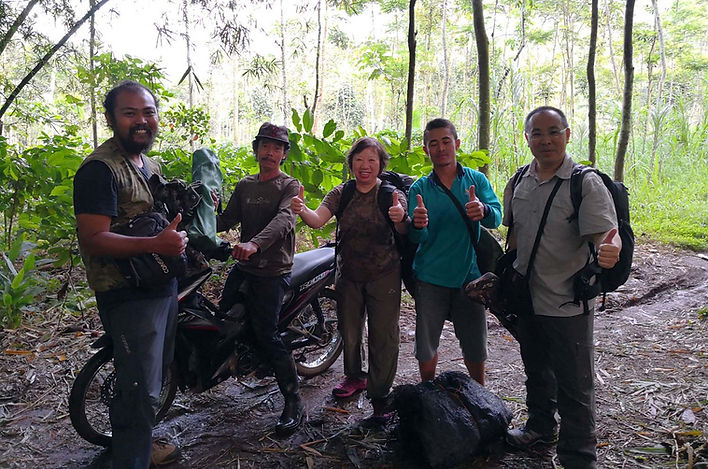
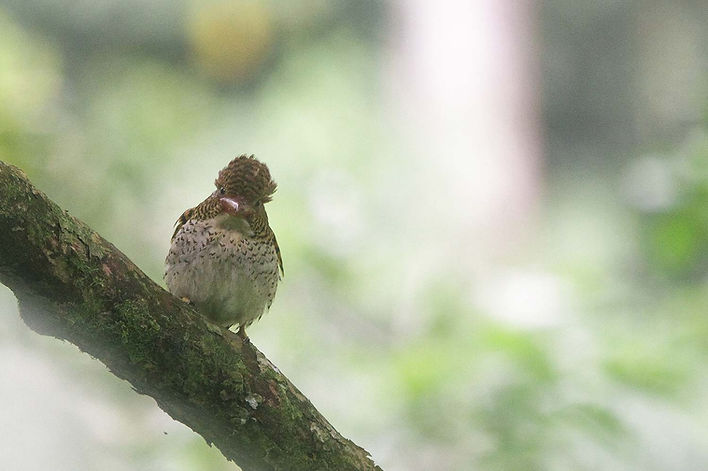
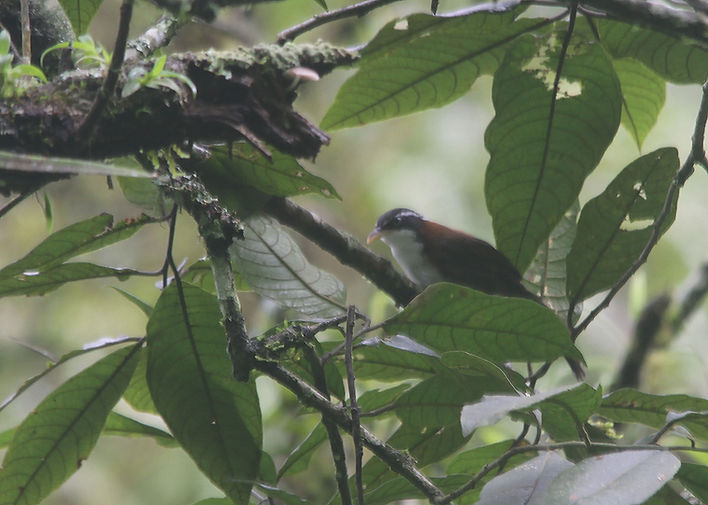
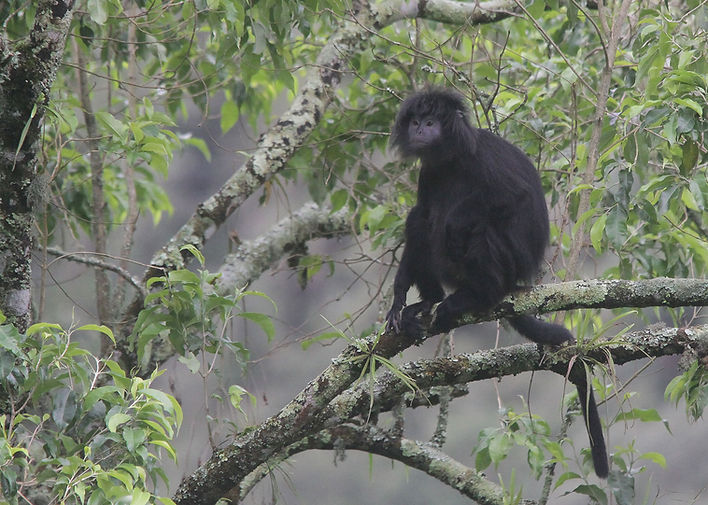
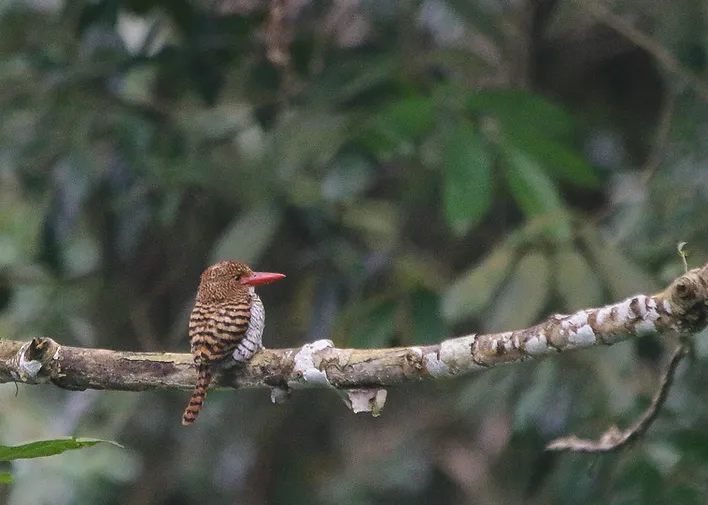
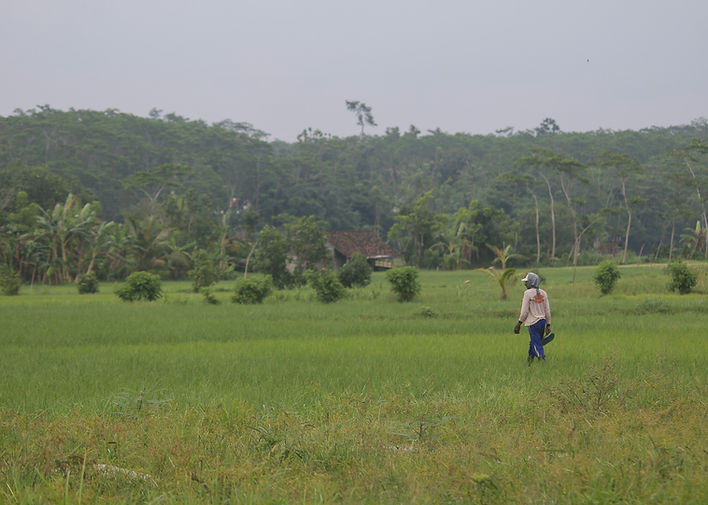
On March 16 – 20th 2018 we managed to arrange bird photography trips for our clients from Hong Kong. This custom-tailor trip only has a few targets, Banded Kingfisher and Javan Banded Pitta. Visited five birding locations around Malang, East Java. We Met up in the afternoon in Juanda international airport, Surabaya on March 16th (Day 1) then we drove to a Hotel in Malang, while having dinner on the way.
Start birding on day two, at 5.00 am we drive to a coffee plantation in Jabung village, Malang to take shots of Javan Banded Pitta. Sadly, we failed because three different nests were empty. Maybe, taken by predators or the chicks already fledged.
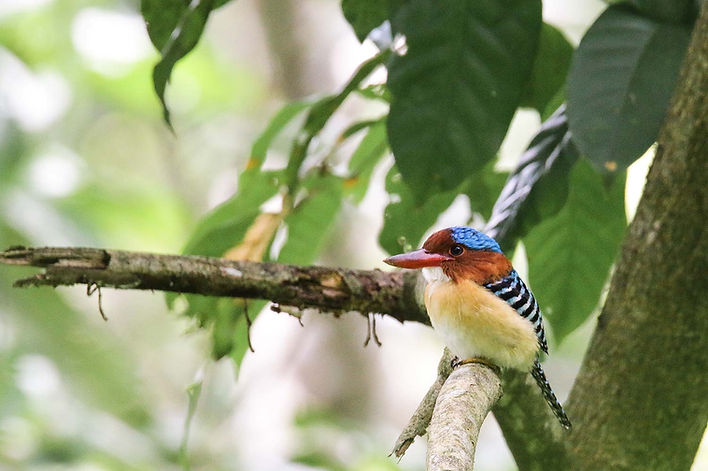
Then we changed direction to Piket Nol, Lumajang in search of the main target, Banded Kingfisher. We hang out near it’s nest from 10.00 am until 4.00 pm. Lucky to see and get the pictures of the female, but we missed the male until afternoon. So, we drove to Hotel Cakra, Malang and tried another chance the next morning.
Start driving at 5.00 am (March 18th) and reach the same location as yesterday at 7.00 am. We waited in a camouflage tent until 10.00 am with no presence of male birds. Then our friends in different spots called us via handy-talky that they saw the male.
Quickly we packed our gear and moved. For 45 minutes we enjoyed and shot many pictures of colorful male birds. Also present the Javan Broadbill that managed to save on our camera’s card.
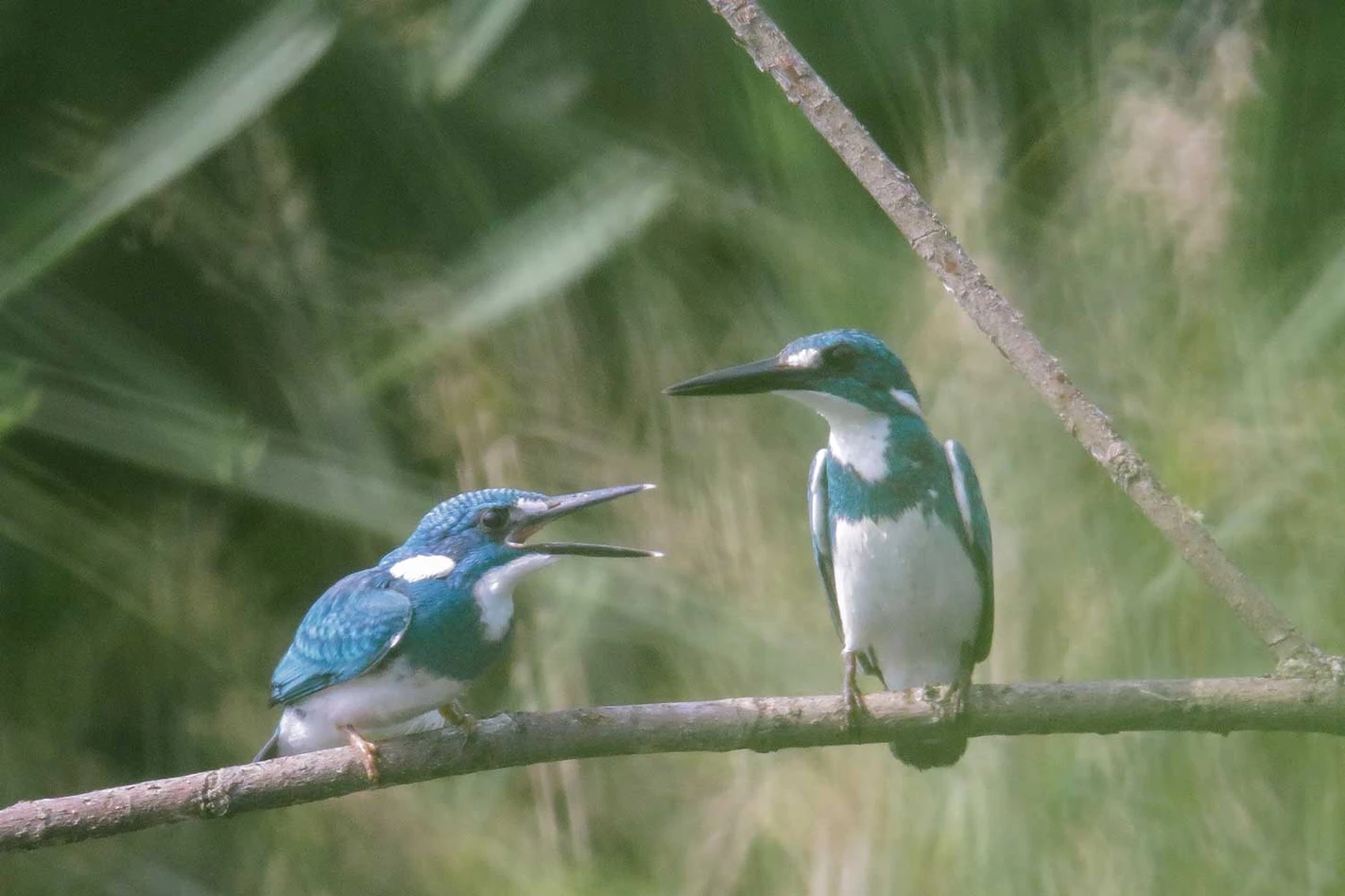
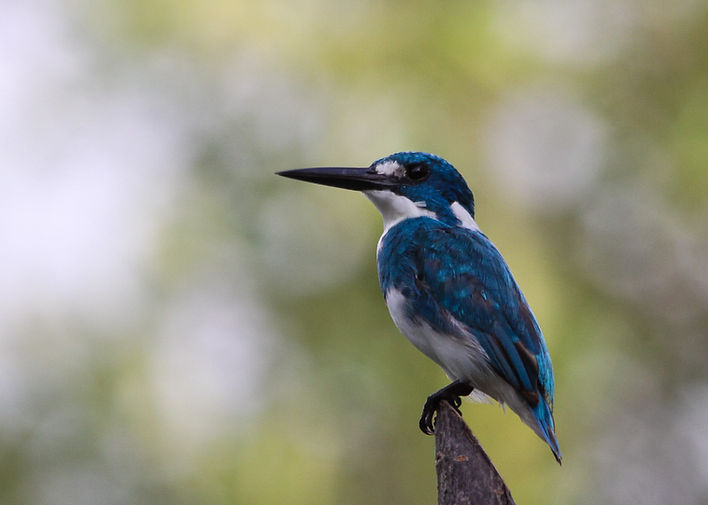
At 12.30 pm we drove to Pasirian, Lumajang while having lunch in a small cafeteria on the way. at 2.00 pm we arrived, built the tent next to small fish-ponds waiting for Cerulean Kingfisher. How lucky we are, one family of 2 adults and 1 immature managed to get the pictures. We enjoyed moving from the area in the afternoon.
We had a long drive on day four (March 19th), six hours driving from Pasirian, Lumajang (our clients want to take Cerulean Kingfisher in early daylight) to Apple Farm in Batu city. When we arrived, the weather was a little rainy. Worried the Javan Kingfisher would not show, but we tried first.
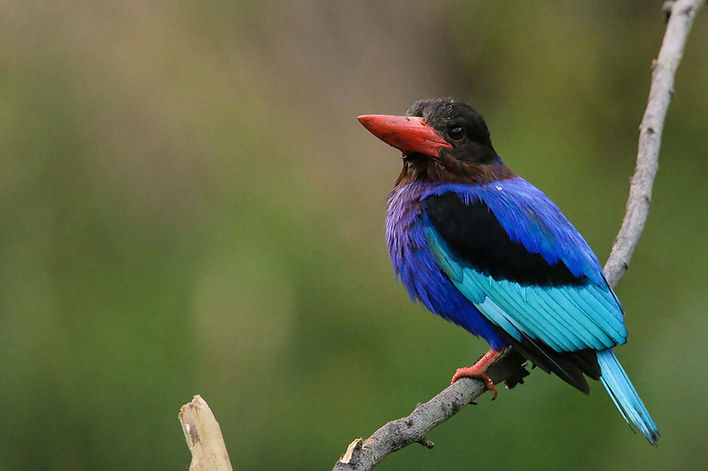
Just waited for 10 minutes, the birds were coming. Perched on a small branch, we had a super close and clear view!
On the last day, we have two hours to get another chance to shoot Javan Banded Pitta in Prigen, Pasuruan before we leave the area. At 9.00 am we finished the tour then dropped off our clients at the airport in frustration of the Pitta!
Javan BroadbillCerulean Kingfisher with it’s preyBanded Kingfisher with cricketOur clients shot the Cerulean KFshot Banded KingfisherCerulean KF immature and adult
Reports fromGizan Hila on his latest birding trip in Sumbawa island.
Two days birding was done on February 28th 2018 and March 1st 2018 at two locations in Sumbawa island, West Nusa Tenggara part of Lesser Sunda archipelago. This trip was more like fun birding. We enjoyed the landscape while the birds showed up to complete the panorama.
Day One – Feb 28th 2018
We visited Nisa Wawi beach at Nanga Nur peninsula, administered in Sangia village, Sape sub-district, Bima regency. To reach this small island we had to drive for 40 minutes from Bima city (boat trip for 20 minutes from Sape harbor).
Only tamarinds which is a big tree on this island, in addition reeds, Lote trees and shrubs that grow around beaches and limestone peninsulas. Finish enjoyed the “beach watching” then we start birding on 8.00 pm, focused for owling until 10.00 pm.
Day Two – Mar 1st 2018
Drive west for 30 minutes from Sape harbor to reach a river which is surrounded by dense vegetation in Diwu Konca (an hour from Sultan Muhammad Salahuddin Airport) . Administered in Sari village Sape sub-district, Bima regency.
We also visited other habitats such as terraced rice fields and bamboo clusters for afternoon birding starting from 3.00 pm until 6.00 pm.
17 participants were joining this party. Managed to see 20 bird species. Here with the highlights such as:
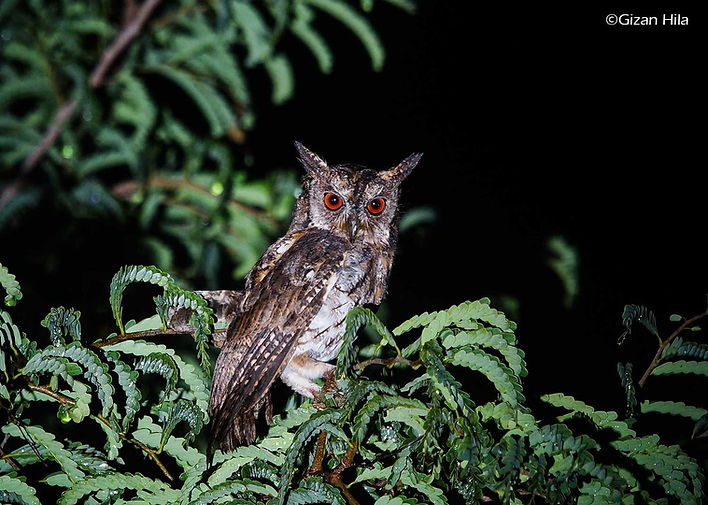
– Mollucan Scops Owl, 5 individuals seen at Nisa Wawi
– 30 individuals White-shouldered Triller at Nisa Wawi – Golden-rumped Flowerpecker, 10 individuals seen at Diwu Konca – Two pairs of Rusty-breasted Whistler at Diwu Konca – A single Grey-capped Emerald Dove at Diwu Konca
Managed to arrange two days birding tours for Sarah Hammarlund from the United States of America during her trips in Yogyakarta (or simply Jogja). This birding tour was run by our local partner birdtour operator, named Loontour Jogja and led by Imam Taufiqqurrahman. Indonesia, especially Jogja, is new for our clients, so almost all the birds she has seen become her lifers. The fruitful trip listed 50 bird species!
On the first day February 26th 2018, we visited Gunung Merapi National Park. While waiting for the gate to open, scanning birds around Plunyon, Kaliurang until 8.00 am. Then move to Plawangan hill via Telogo Nirmolo. At 12.00 am I managed to see 22 bird species. Next, drive for 45 minutes to Jogja city at Melia Purosani hotel in search of Java Sparrow.
Scanning around pines tree at west part of the hotel, quickly pairs of the birds catch by our scopes as close the day.
The trip continued on March 2nd 2018, the first stop was Jatimulyo village as part of Menoreh Mountains (an hour drive west of Jogja city). Searching lowland birds around this agroforest ecosystem. At noon we drive for an hour to Trisik beach and Kali Progo estuary for shorebirds. Visited three habitats such as paddy field, beach and estuary.
Fun! 30 birds on the second day. She was very excited with things beyond, such as the village situation, knowing the plantations that become popular products: coffee, chocolate, sugar palm. Even requested to see the ‘shy princess’ plant 😀
Finished the trip at afternoon with some highlights:
– 2 individuals of White-flanked Sunbird at Telogo Nirmolo, Gunung Merapi NP as her favorite
– Javan Whistling Thrush at Telogo Nirmolo, Gunung Merapi NP
– Small flock of Javan Fulvetta at Telogo Nirmolo, Gunung Merapi NP
– 5 individuals of Pink-headed Fruitdove at Telogo Nirmolo, Gunung Merapi NP
– 5 individuals of Java Sparrow at Melia Purosani hotel
– Ruby-throated Bulbul at Jatimulyo village
– Streaky-breasted (Javan) Spiderhunter at Jatimulyo village
– 4 individuals of Cerulean Kingfisher at Kali Progo esturary
– Javan Plover at Kali Progo estuary
Other notable birds included:
Slender-billed Crow, Javan Myna, Asian Glossy Starling, Striated Grassbird, Red-breasted Parakeet, Long-tailed Shrike, Ashy Drongo, Oriental White-eye, Ashy Tailorbird, Chestnut-backed Scimitar-babbler, Sunda Bulbul, Barred Cuckoo-dove, Spotted Dove, Crested Honey Buzzard, Yellow-vented Bulbul, Black-capped Babbler, Crested Goshawk, Cave Swiftlet, Sunda Pygmy Woodpecker, Black-winged Flycatcher-shrike, Common Iora, Sooty-headed Bulbul, Hordfield’s Babbler, Asian Brown Flycatcher, Orange-bellied Flowerpecker, Brown-throated Sunbird, Little Spiderhunter, Javan Munia, Peregrine Falcon, Little Egret, Eastern Cattle Egret, Javan Pond Heron, Yellow Bittern, Barred Buttonquail, Pacific Golden Plover, Common Sandpiper, Greater Crested Tern, Barn Swallow, Zitting Cisticola, Plain Prinia, Olive-backed Sunbird.
When in Malang or Surabaya you can get a pretty neat bird list just by visitingTahura Raden Soeryo at 37 Km to the north of Malang city (90 Km to the south-west of Surabaya city), on the west slope of Mount Welirang.
If there are still days left during the holidays in Malang which is usually the main purpose is Mount Bromo, can be tried fullday or halfday birding trips in this peaceful montane forest.
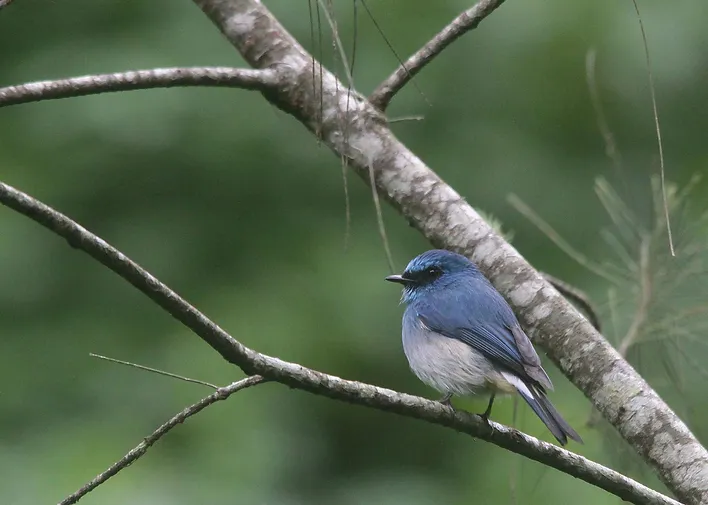
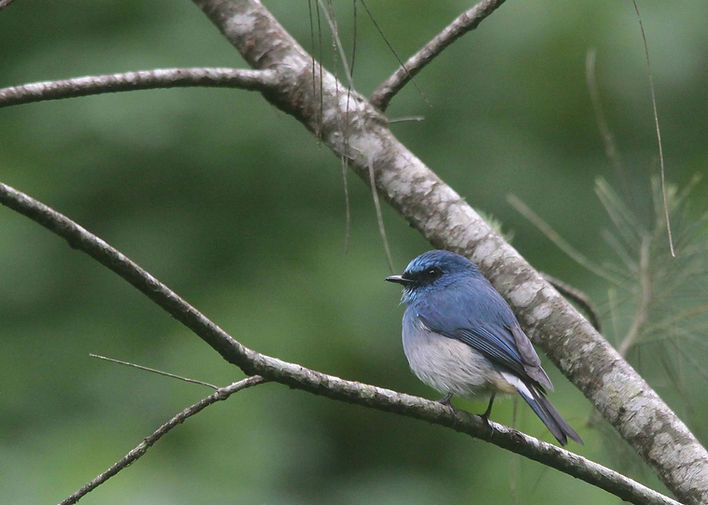
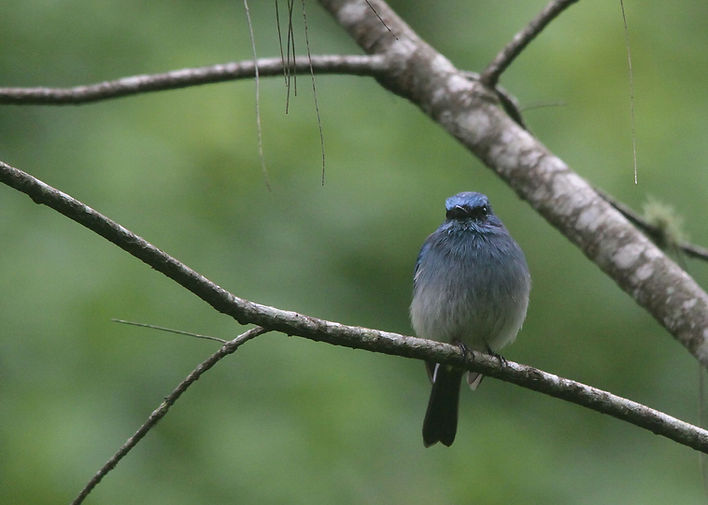
As we did on February 14, 2018 went very well with one participant from England. Our clients want to get some nice photos of endemic Indigo Warbling Flycatcher Eumyas indigo. Very easily he got it and a bonus Narcissus Flycatcher Ficedula narcissina as his lifer.
We visited three different spots around Tahura Raden Soeryo. In the morning we went to the first stop in Watu Ondo Waterfall. We were searching for birds around the parking lot surrounded by bushes and trees that were quite dense. Around the canteen did not escape from our binoculars view, this place is suitable to see the activity of birds on the top tree’s canopy and also to enjoy the view of the waterfalls. In addition we also went down the river starting from the side of the canteen. The trees around the toilet are also valuable for checking, often seen as a mix flock in this area.
Low bird activity we decided to visit Cangar hot springs, stop by at the Twin Bridge but the conditions here are also the same. The trek to the Japanese cave is the main birding location in Cangar hot springs. About 400 meters long tracks surrounded by bushes and trees typical of mountain forests. In addition, the river that flows around Cangar and around the cafeteria is worth adding to the list of birds.
Highlights: – One pair of Orange-spotted Bulbul with a great view in the parking area of Watu Ondo waterfall.
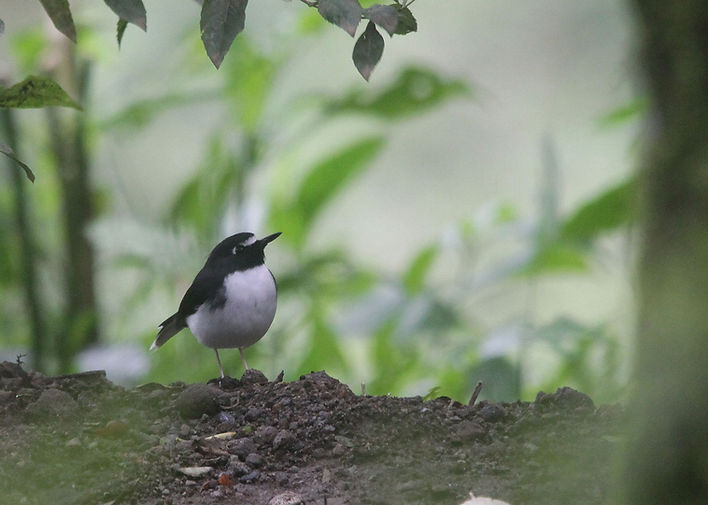
– One pair of Sunda Forktail seen behind the canteen of Watu Ondo waterfall.
– 4-6 individuals of Indigo Warbling Flycacther at the parking area of Watu Ondo waterfall.
– Two individuals Narcissus Flycatcher around the toilet of Watu Ondo waterfall. This species is rare visitor to Indonesia.
– Six individuals of Javan scimitar-babblers (recently split from Chestnut-backed scimitar-babblers by some authors) near a Japanese cave.
– Two pairs of Pied-shrike Babblers in front of canteen Watu Ondo waterfall. – One pair Thrilling-shrike Babbler in front of canteen Watu Ondo waterfall.
Other notable birds included:
Flame-fronted Barbet, Long-tailed Shrike, Crested-honey Buzzard, Crested Serpent Eagle, Black Eagle, Spotted Dove, Ruddy Cuckoo-dove, Pink-headed Fruitdove, Chestnut-breasted Malkoha, Cave Swiftlet, Banded Broadbill, Grey Wagtail, Javan Cuckooshrike, Sunda Minivet, Black-winged Flycatcher-shrike, Sooty-headed Bulbul, Sunda Bulbul, Lesser Shortwing, Javan Whistling Thrush, Crescent-chested Babbler, Horsfield’s Babbler, Sunda Bush Warbler, Common Tailorbird, Snowy-browed Flycatcher, Blue Nuthatch, Blood-breasted Flowerpecker, White-flanked Sunbird, Ashy Drongo.
For 3 days we visited the most popular Bromo Tengger Semeru National Park, East Java which is famous for its panoramic epic Mount Bromo, Tenggerese peoples and the highest peak of Java island, Semeru mountain. In contrast to other visitors who usually visit the breathtaking mount Bromo or climb Semeru mountain, we visited four birding spots around that area. This National Park still has a large rainforest that is still good and protected, and would be good habitat conditions for wildlife, especially birds.
On 17 January morning we headed to Piket Nol, Lumajang, East Java. The cliff area that became the crossroad of Malang-Lumajang highway still has good forest. We start from the searching of a bridge then walk westwards. In the morning the condition of passing vehicles is quite rare, so we just enjoy bird watching. Highlight birds that we managed to see for this spots are (Javan) Buff-rumped Woodpecker, Banded Kingfisher, (Javan) Banded Broadbill, Yellow-throated Hanging-parrot, Yellow-eared Barbet and Grey-cheeked tit-babbler.
Then at noon we drove to the south coast of Lumajang, at Selok Anyar village where habitat in this area is a rice field along the edge of the coastline with some angles there are fish ponds owned by the residents. Also there are some rice fields that become pastures where the buffalo graze.
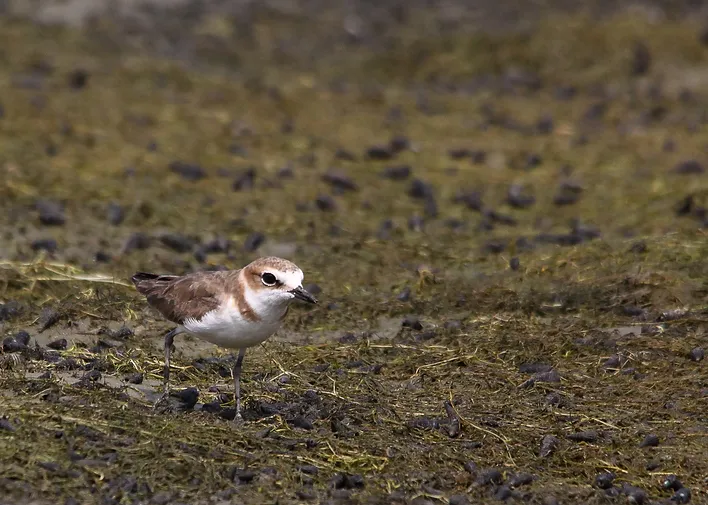
We arrived here at 1.00 pm at a fishpond, immediately greeted by the Small-blue Kingfisher flying past us toward the other ponds. Then we walked along the rice fields, pastures and ponds to the rows of Australian pine tree beachside. As a result we noted many birds and the highlights were Javan Kingfisher, Small-blue or Cerulean Kingfisher, Javan Plover, Red Avadavat, Javan Munia.
On the second day we can only do a short birding until 10.30 pm in Ranu Darungan, Bromo Tengger Semeru NP because the rain does not stop until night. But in the lowland forest with a semi-natural lake, we managed to note endemic birds such as Javan Kingfisher, Sunda Cuckoo, Javan-banded Pitta, Sunda Forktail, and Javan Sunbird.
Similarly on the last day we were less fortunate. Arriving at the fourth birding spot, Coban Trisula departs from Ranu Darungan 1.5 hours through the rainforest in the area of Senduro and Tengger villages in Ranu Pani village and arrives at the location around 10:00 am. Not long after the rain was down until the afternoon. The rain stopped briefly, and there were some active birds like Pink-headed Fruitdove and White-browed Shrike-Babbler as well as the end of birding trips at Bromo Tengger Semeru NP.
HIGHLIGHTS:
(Javan) Buff-rumped Woodpecker: 2 individuals seen at Piket Nol, Lumajang, East Java.
Banded Kingfisher: a female perched for 30 minutes at Piket Nol, Lumajang, East Java.
(Javan) Banded Broadbill: 2 adults with 1 immature, looking for it’s meals at Piket Nol, Lumajang, East Java.
Yellow-throated Hanging-parrot: 2-3 birds were foraging at Piket Nol, Lumajang and 1 flight at Ranu Darungan, Bromo Tengger Semeru NP, East Java.
Yellow-eared Barbet: party of 22 birds at fruiting ficus sp tree in Piket Nol, Lumajang, East Java.
Sunda Coucal: 2 birds seen at sugarcane fields in south-coast of Lumajang, East Java.
Grey-cheeked Tit-babbler: a small flock about 6 birds at Piket Nol, Lumajang, East Java.
Crescent-chested Babbler: 6 birds foraging at bushes in Ranu Darungan, Bromo Tengger Semeru NP, East Java.
Javan Plover: a small flock of 6 birds foraging at paddy field in south-coast of Lumajang, East Java.
Javan Kingfisher: 3 individuals at paddy field south-coast of Lumajang and 1 bird at Ranu Darungan, Bromo Tengger Semeru NP, East Java.
Small-blue or Cerulean Kingfisher: 2 birds perched at a fishpond in the south-coast of Lumajang, East Java.
Blue-eared Kingfisher: a pair of male and female around lake of Ranu Darungan, Bromo Tengger Semeru NP, East Java.
Javan-banded Pitta: 4 individuals calling each other at Ranu Darungan, Bromo Tengger Semeru NP, East Java.
Javan Sunbird: A pair of male and female in Ranu Darungan, Bromo Tengger Semeru NP, East Java.
Sunda Forktail: single bird at the lake of Ranu Darungan, Bromo Tengger Semeru NP, East Java.
Sunda Cuckoo: 2 birds singing in the canopy of a big tree in Ranu Darungan, Bromo Tengger Semeru NP, East Java.
Pink-headed Fruitdove: 1 adult and 1 immature foraging at Coban Trisula, Bromo Tengger Semeru NP, East Java.
White-browed Shrike-Babbler: 1 male and 2 female catch moths at Coban Trisula, Bromo Tengger Semeru NP, East Java.
Red Avadat: 30 individuals looking for food on the ground of a paddy field in the south-coast of Lumajang, East Java.
Javan Munia: total 67 birds foraging paddy seed at paddy field in south-coast of Lumajang, East Java.
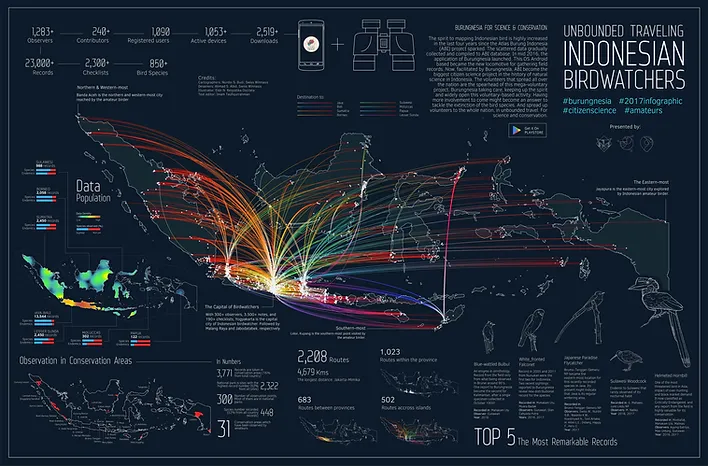
Android OS based app Burungnesia was already 1.5 years old at the end of 2017. Burungnesia was designed as a digital field observation tool. It collects records from bird watchers throughout Indonesia.
At least it holds more than 23,000+ records with 2,300+ observation locations. Interestingly, 850 more species have been recorded, at least that number already represents half of existing bird species in Indonesia. This is a shared dream since 2013 ago from Indonesian birdwatchers, answering how scattered observation data can be collected into one.
A colossal dream of the amateurs for birds, now, tomorrow and forever. A mega-voluntary project that is funded by pure love beyond anything. An endless amateur work. The highest appreciation for all Indonesian birdwatchers !!!
Sumbawa island is part of the lesser sunda area, it’s located between Lombok, Flores and Sumba islands. In terms of birding activities, this island is often missed or skipped by most birders. Fortunately there are some local birders who are avid enough to explore and document the existence and diversity of birds. Surprisingly, almost all the endemic species are relatively easy to photograph, which was suitable for bird photography tours on Sumbawa island.
For six days (09 – 14 November 2017) we were in Bima, Sumbawa, West Nusa Tenggara. Precisely in TWA Madapangga to attend the Pertemuan Pengamat Burung Indonesia VII (Indonesian Bird Watchers’ Meeting VII) on 10-12 November 2017 and extended two days to focus on birding in other locations.
At the meeting there were birdwatchers from Jakarta, Bandung, Yogyakarta, Malang, Bali, Lombok and from local birdwatchers of Bima. The Sindikat Fotografer Wildlife Bima-Dompu was the organizer and host of the meeting.
TWA Madapangga is located in the west of Bima city with a distance of about 45 Km or takes about 1 hour drive by car. The area of 232 Hectares is administratively in the village of Ndano, Bolo sub-district, Bima district, West Nusa Tenggara Province.
This nature park is a source of water for the dryness of the surrounding area. Residents around the area are very dependent on the river and its springs. In the morning and evening I could meet with residents who bathe or wash clothes in the river that is located exactly on the road which connects Bima with Sumbawa city. The topography of this location is generally hilly with a slope of 15 – 40 degrees, only a small part is a relatively flat area with varying heights from 200 to 600 m above sea level.
Birding spots are relatively easy to reach, such as following the loop-track of the camping ground, around the river, and garden of the pool. We tried all those spots while we were there.
After the meeting, we moved to Kaowa village, Lambitu sub-district, 2 hours heading to the east of central Bima city. In this hilly village is widely used as a garden or farm area by residents with the rest of the monsoon forest on each hilltop. Birding spots are located around the village water springs and the edge of forests after farm areas close enough to residents’ houses.
PARTICIPANTS:
Swiss Winasis, Waskito K Wibowo, Ah Saiful Abid, Imam Taufiqurrahman, Alkharim Yoshe, Afran “Tpal Duablas”, Abdul “Gizan Hila” Azis. ITINERARY:09/11/2017 – At the evening arrived in Airport and drive to TWA Madapangga. Overnight on the tents. 10/11/2017 – Morning birding until noon. Lunch and follow the meeting until 09.00 PM. Owling for one hour. Overnight on the tents. 11/11/2017 – same as above12/11/2017 – Morning birding until noon. After lunch moved to Kaowa village. Arrived at 06.00 PM then dinner with local families. Owling until 10.00 PM. Overnight in local families. 13/11/2017 – Full day birding around the edge of forest and water spring. After dinner owling around water spring again until 10.00 PM. Overnight in local families. 14/11/2017 – Drive to the airport, birding on the way. At noon we flight home and birding trips in Bima, Sumbawa island was ends.
HIGHLIGHTS:Glittering or White-rumped Kingfisher – 2-3 birds seen at looping track at the TWA Madapangga. 2-3 birds seen at garden and around water spring of Kaowa village.
Elegant Pitta – 5-6 birds seen behind the camping ground and edge river of TWA Madapangga. 2 birds seen at water spring of Kaowa village. Relatively vocal during our visit.
Flores Hawk-eagle – A clear view of a single bird while perched near the road at the edge of Kaowa village. Mollucan Scops-owl – 30 minutes clear view of single perched bird behind the camping area of TWA Madapangga. 3 birds (two adult and one juvenile) seen at water spring of Kaowa village. Wallacean (Flores) Drongo – Two nest about 6-8 birds seen around the pool of TWA Madapangga. Two nests are also around the garden and water spring of Kaowa village. Flame-breasted Sunbird – Male and female birds at flowering Water rose apple tree around the pool of TWA Madapangga. 2 birds at garden of Kaowa village. Black-fronted Flowerpecker – 2 birds seen near river at fruiting tree’s TWA Madapangga. Yellow-spectacled White-eye – Common in all birding spots visited. Flores Minivet – A pair on the way to the Airport from Kaowa village. Brown-capped Fantail – Single bird at loop trek’s TWA Madapangga.
Other notable birds included – Spotted Dove, Barred Dove, Cave Swiftlet, Lesser Coucal, Black-winged Kite, Oriental Honey-buzzard, Short-toed Snake-eagle, Oriental Dwarf-kingfisher, Common Kingfisher, Collared Kingfisher, Sunda Pygmy Woodpecker, Spotted Kestrel, Scaly-crowned Honeyeater, Helmeted Friarbird, Black-naped Oriole, Rusty-breasted Whistler, White-shouldered Triller, White-breasted Woodswallow, Black-naped Monarch, House Swallow, Sooty-headed Bulbul, Brown-throated Sunbird, Scaly-breasted Munia, Eurasian Tree Sparrow.
Birding in Wonorejo wetland, located at the Surabaya south east-coast, with a total area of approximately 50 hectares and consists of fishpond (locally called tambak), scrub and mangrove areas affected by tidal, provides a broad mudflat for feeding grounds to resident and migratory birds in estuary area. This site is important for migratory seabirds and shorebirds/waders in East Asia-Australia Fly Away, also birdlife listed Wonorejo as Important Bird Area.
Administratively in Wonorejo village, Rungkut sub district, Surabaya City, East Java. The area became the best locations for birding and bird photography in the Metropolitan Surabaya. Easy driving distance for 15 km from city centre (45 minutes). The nearest airport is Juanda International Airport (45 minutes).
Three major paths or spot to explore approximately 150 birds species in the area, read below:
1. Parking Area (Near Canteen “Mbok Rum”)
Start from around the parking area, walk and observe some birds may you see here are Collared Kingfisher, Cattle Egret, Little Egret, White-browed Crake, Common Moorhen, Plain Prinia, Yellow-bellied Prinia, Brown-throated Sunbirds.
Some endemic birds such as Scarlet-headed Flowerpecker, Small-blue or Cerulean Kingfisher, Javan Munia and Javan Plover. And during the migration season of the North Hemisphere, various migratory birds might be seen such as Red-necked Stint, Curlew Sandpiper, Long-toed Stint, Common Sandpiper, Greater Sand Plover, Lesser Sand Plover and more.
2. Fish Pond
From the parking area walk to the east towards the fishpond area. Along the paths the birds might can be seen are White-headed (pied) Stilt, Lesser Crested Tern, White-winged Tern, Little Tern, Common Tern, Gull-billed Tern, Australian Grebe, Little Cormorant, Spotted Dove, Common Iora, Javan Pond Heron. If lucky, some endemic and rare birds such as Javan Coucal and Java Sparrow. There are several fishponds where the specific shorebirds prefer presents such as Bar-tailed Godwit, Great Knot, Whimbrel, Far-eastern Curlew, Eurasian Curlew, Common Redshank, and more.
3. Mangrove track and Estuary
Continue walk in the east direction to explore the last birding-site, at mangrove track. Hang and walk around the mangrove until 5pm to meet Golden-bellied Gerygone, Racket-tailed Treepie, Malaysian Pied Fantail, Mangrove Whistler, Ruddy-breasted Crake, Cinnamon Bittern, Yellow Bittern, Striated Heron. With some luck the endemic Javan White-eye might be able to be seen, recently the species is hard to find because of massive poaching.
Access and Accomodation Many good quality hotels around Surabaya city and ask the receptionist to arrange a taxi or ojek to get to Wonorejo wetland. If you are confused to determine the birding spot, ask local guides to accompany you in the field.
Notes: We advise you to write down in the Guest Book and add some extra money for conservation donation at Canteen “Mbok Rum”. Take a scope, sun tan lotion and hat to get the most out of the site!
A sunny day when we were birding in Tahura R. Soeryo, Malang, East Java on 21 October 2017 with a family group from Jakarta. I Departed from Batu city around 08.30 am and arrived at the first location around Cangar hot spring 09.30 am.
We started walking around the cafeteria, we were greeted by Gray Wagtail flying down a small river in front of the canteen. Then scoped at the branches of the trees around. For 10 minutes only Sooty-headed Bulbul appeared.
Moved around the public toilet immediately greeted a Javan Kingfisher perched on the tree behind the toilet. We approached and looked for a clear view to enjoy its colorful feathers. These Java-Bali endemics are usually not easy to observe, it would fly away when seen by people approached.
Then the mix-flocks come with a noisy tweet at the top of the trees near the hot spring garden. The observed species such as Black-winged Flycatchershrike, Sunda Minivet, Sunda Cuckooshrike, Ashy Drongo, Blue Nuthatch and Velvet-fronted Nuthatch.
Next, we went into a jogging trek that led to the Japanese cave. Quite quiet along this path, just heard Rusty-breasted Cuckoo singing and a fast view of Oriental Cuckoo. Likewise when we arrived in front of the Japanese cave, hardly any birds appeared.
Wait a while and at least see the female White-flanked Sunbird and Javan Whistling Thrush which was the island’s endemic. Around 11.30 am I moved to the second spot, Watu Ondo ‘s parking area and park.
SeriousGroup Photo
Upon arrival, an Indigo Flycatcher welcomed us.Indigo subspecies became full species spread only in montane and submontane primary and moss forests of Java. He perched on the bushes and occasionally grabbed the flying insects around it.
The raptor migration had begun, marked by the presence of Crested Honey Buzzard soaring high enough above us, then flew away from view.
We then walked in the opposite direction and found some Flame-fronted Barbet foraged at Ficus sp trees. This bird was very tame and did not care about us observing it close enough, about 10 meters.
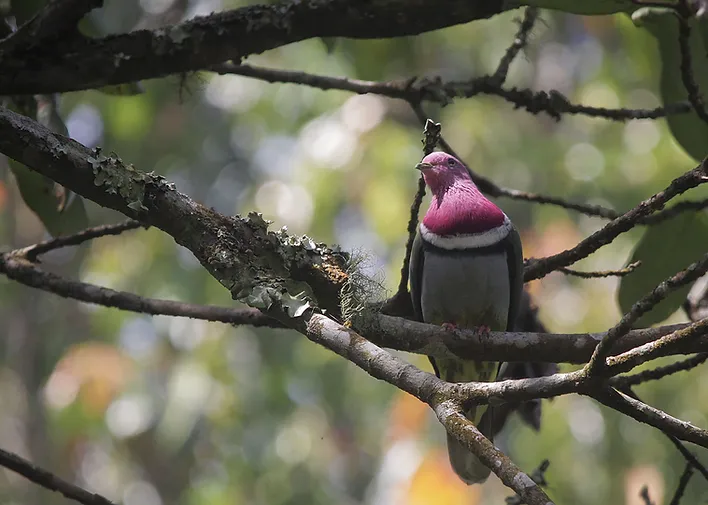
Suddenly in the same tree from behind the leaves came a Pink-headed Fruit-dove to the center of a twig near the main stem. The red color in the head to his chest very firmly indicates that this was a male bird.
Same with the previous species, he did not feel disturbed by our presence. For approximately 45 minutes, we enjoyed this beautiful bird. Sometimes he ate the fruit of Ficus sp and then moved to perched and returned to eat the fruit. This live in the mountain forests of Sumatra and Java, became tour closing. Although it was only one day, at least we were lucky to see many species that were quite elusive and of course beautiful.
Systematic List:
1. Sooty-headed Bulbul | Pycnonotus aurigaster
2. Grey Wagtail | Motacilla cinerea
3. Lesser Forktail | Enicurus velatus | Heard Only
On 14-15th October 2017 we received an invitation from Seabirds Indonesia (Burung Laut Indonesia) to perform seabirds surveys and monitoring especially to one of the most threatened seabirds in the world that listed on IUCN as critically endangered, the Cristmas Island Frigatebird around Jakarta Bay and marine area of the Kepulauan Seribu National Park, Jakarta.
This big pelagic bird with dominant feather colored black and white is an endemic island of Christmas, a small oceanic island governed by Australia in the eastern Indian Ocean, about 360 km south of Java, Indonesia. Using marine areas in Indonesia especially around Jakarta Bay for forage while breeding with Juvenile which will stay until mature and ready to return for breeding. The highest numbers ever known about Christmas Island Frigatebird are 209 individuals in this location from a total population of about 2400-4800. The numbers were not small considering the threat around Jakarta Bay, among others: Entanglement in fishing gear, Capture and attachment of string to leg, Poisoning / Sedating, and Shooting.
Team on boatScopingIdentifyInterview
We calculate the age of each individual Christmas Island Frigatebird and look for potential threats in Jakarta Bay and Kepulauan Seribu. In addition to Christmas Island Frigatebird, we also recorded the species of seabirds that use the marine area of Jakarta Bay and Kepulauan Seribu for forage or roosting during the migration season.
In addition, we also conducted a special interview with the head of a group of fishermen on the Harapan island.
Departing from Tanjung Pakis, Tangerang, Banten at around 08.00 am we sailed to sero (Traditional fishing) about 45 minutes. At the sero bamboo stakes that seabirds use for perch, we also counted seabirds passing by and flying around the fishing boats.
We had encountered such as Christmas Island Frigatebird, Great Frigatebird, Lesser Frigatebird, Little Black Cormorant, Greater Crested Tern, Lesser Crested Tern, Common Tern, Black Naped Tern, Brown Noddy, Oriental Darter, Glossy Ibis, Swinhoe’s Storm-petrel.
Flocks of FrigatebirdFishermen and FrigatebirdsLesser FrigatebirdAdult female Christmas FrigatebirdSurfing on SandalPerchedAloneClose upFlightMirroringAnother surfing bird3rdAdult male Christmas Frigatebird perchedPerchedDucks?Hiding on leaveFlock Terns in FlightOne by oneCrowd flockFlockgroup of Common TernAt about 01:00 pm we started to go to Harapan island overnight and met with fishermen to find information about the threat of seabirds.
At 03.30pm we arrived at Harapan island, then headed to the Kepulauan Seribu NP office and met staff and fishermen. 04.30 pm with local staff and fishermen we did afternoon birding around the shoreline of Harapan island. The birds that can be encountered such as: Slender-billed Crow, Pacific Reef Egret, Eurasian Whimbrel, Barn Swallow and Collared Kingfisher.
In the evening we discussed with the head of the fishermen group of Harapan island. Apparently most of the fishermen in Harapan island already understand the role and importance of seabirds, mainly helping them in finding fish locations. According to them, seabirds accidentally enter their fish nets. From the statement we ask to immediately release if in the future there are seabirds who accidentally enter into the net or fish trap.
15 October 2017 at 09.00 am we left for Tanjung Pakis while recording and counted the seabirds along the way. No new species were found. Around 02.00 pm we arrived at Tanjung Pakis and the activity in this month is over. Will be done again per month until December 2017.