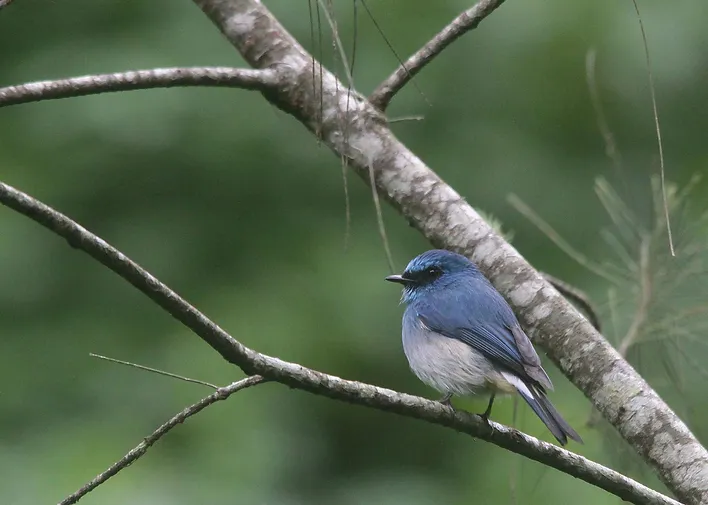
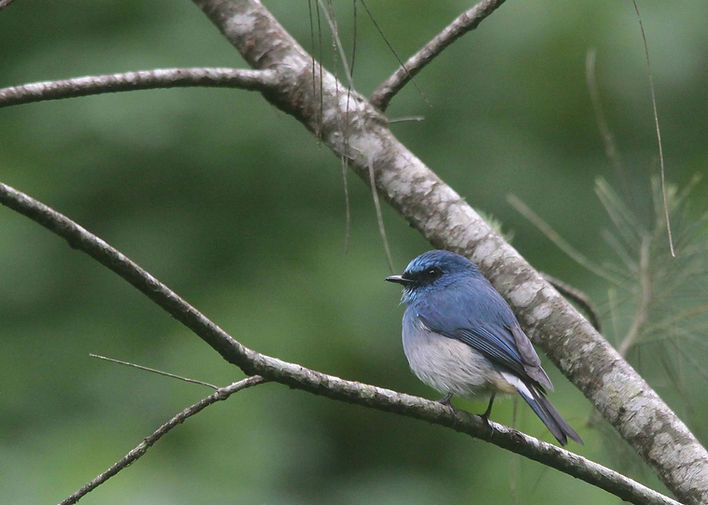
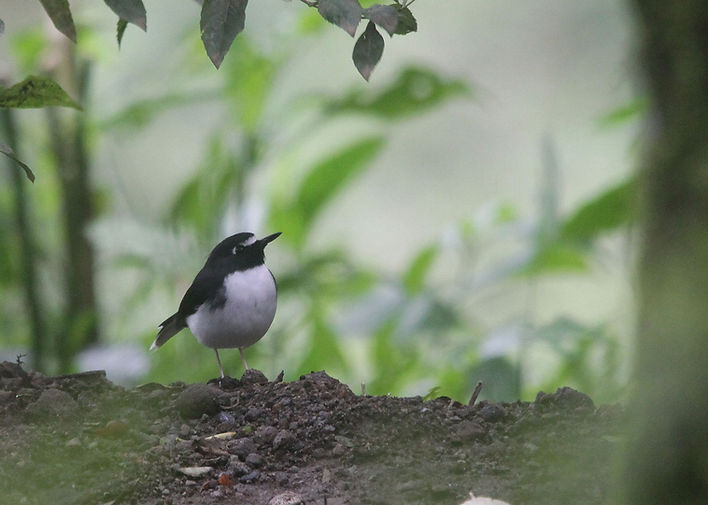
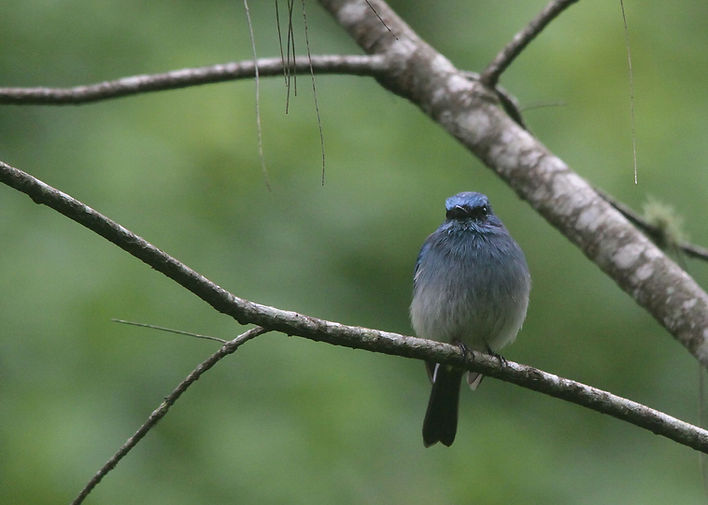
Birding in Cangar Hot Spring with Friend from England

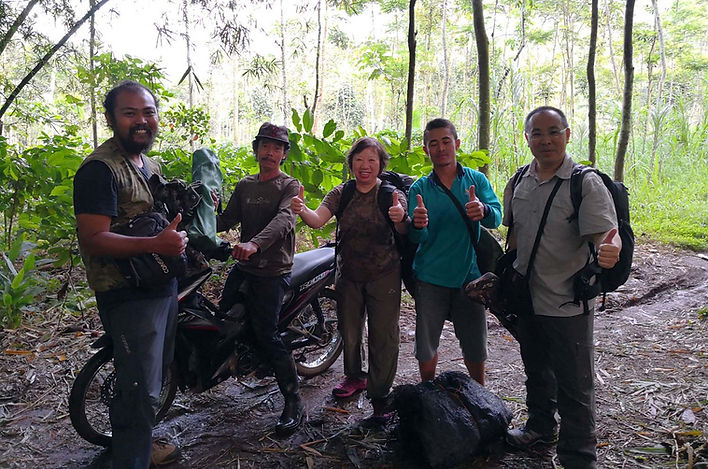
We have been visited by friends from England during his research in Java, Indonesia. He accompanied by local teams drove to our base-camp in Batu city, East Java. Suddenly the next day (July 7th 2018) we went to the Cangar hot spring part of Tahura R. Soeryo, indeed for birding!

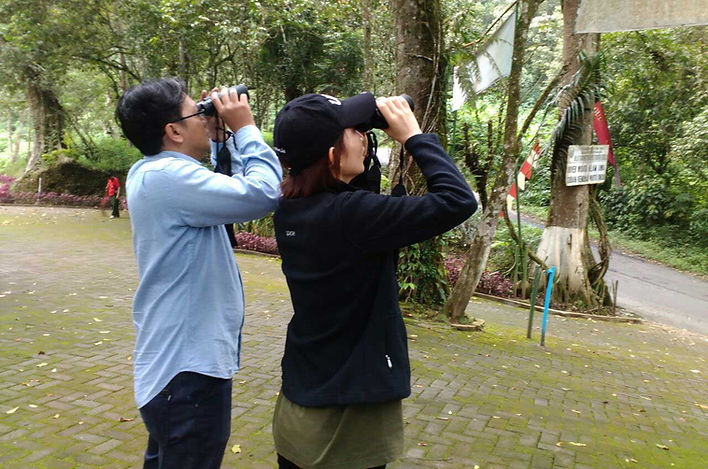
With 9 people in the group, we started looking at the birds around the Cangar hot spring. The weather was so good and very cool for us, but not for Harry.

Any tourist attractions would be visited by many visitors. We also experienced that condition on that day. So we tried to hike in a jungle track behind the hot spring.

The length of the circular track is about 1 Km, with a fairly steep incline at the beginning and before half the length of the track.

We stopped for a while in front of a Japanese cave, scanned all directions and paid attention to every movement of leaves or twigs, hoping there was a bird behind the movement.

The pace of the trip was so dynamic, at the beginning we just saw a few bird species then after leaving the Japanese cave, we were stopped by a mix flocks. Then when we are at the half of the track, the birds become low again until the end of the track.

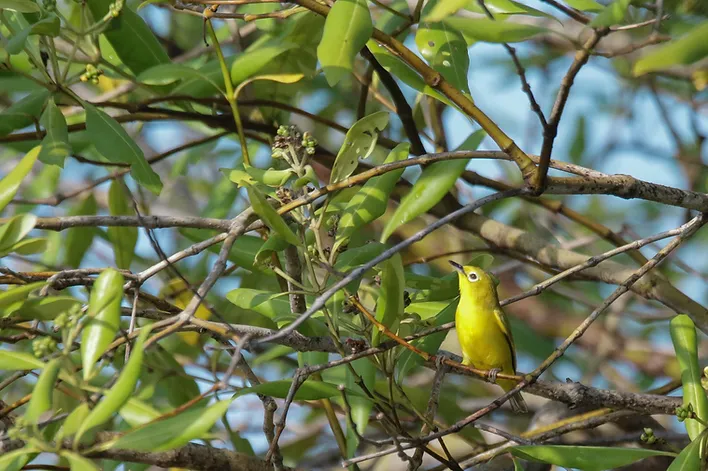
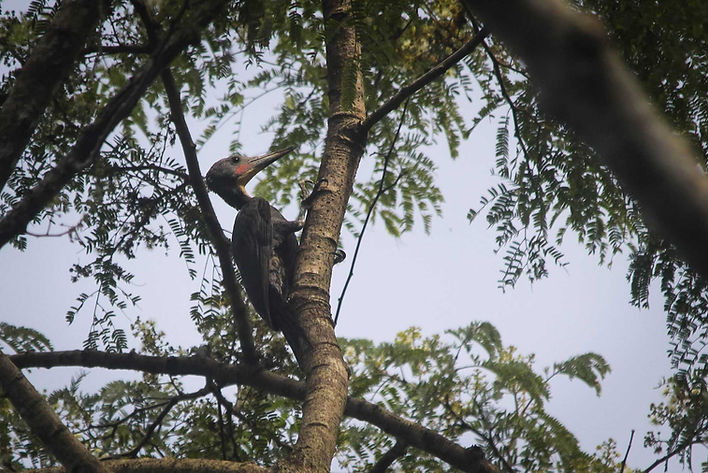
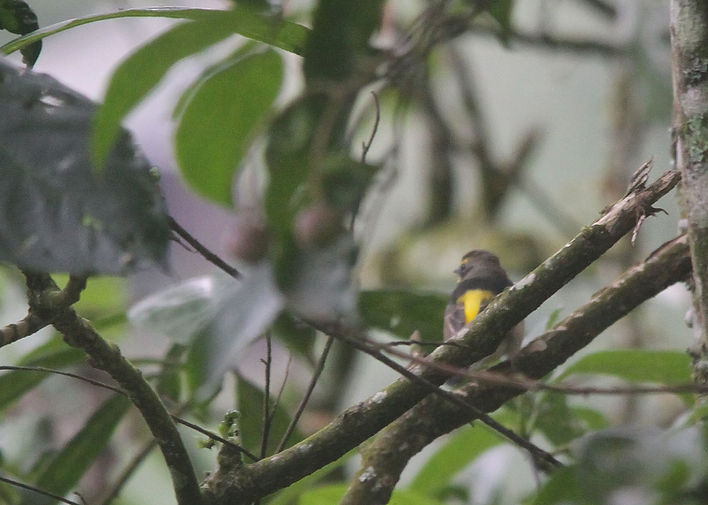
One of 4 Javan Yellownapes in Cangar Hot Spring

Orange-breasted Trogon was the main target for Harry, but only 3 of us successfully encountered it and made Harry Jealous.

This happened when I invited Harry and 5 other friends to chase the bird’s sounds, while three other friends waited on the main track. When we were near the source of the sounds, the bird even went out to near 3 of our friends.

Highlights of the day were:

1. Four individuals Javan Yellownape Chrysophlegma mentale.

– Saw around Japanese Cave, possibly 2 young and a pair of adults.

2. Pink-headed Fruit-dove Ptilinopus porphyreus

Single female bird near the Japanese Cave

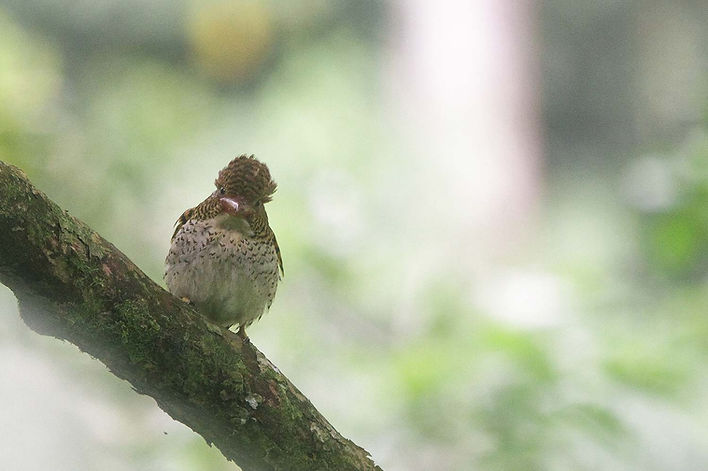
3. Black-banded Barbet

Single bird near the Japanese Cave and 2 before half of the jungle track.

The rest of bird-list is below.

I invited the groups for lunch in Sendi, to taste local food called Nasi Jagung (corn rice) equipped with salted fish, tofu, tempe, water spinach and sambal. Then we moved to jembatan Cangar (Twin Bridge) for dessert, which was Tape Ketan (fermented black sticky rice).
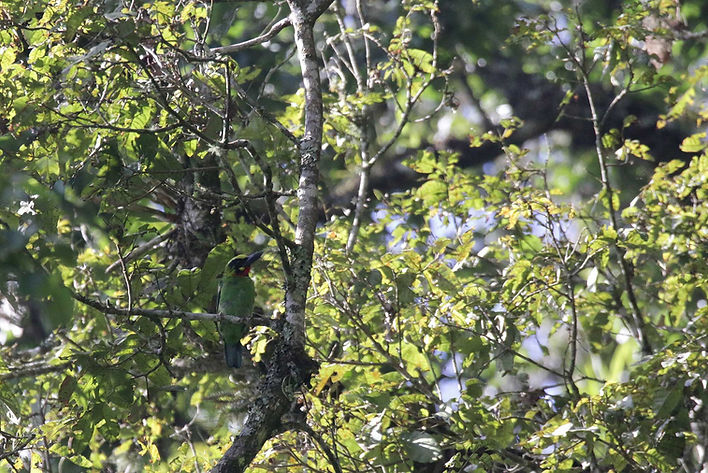
Black-banded Barbet, endemic for Java

While we enjoyed the dessert, we waited for the Javan Hawk-eagle. Sadly the birds was not shown, only a single male White-flanked Sunbird seen by me.

At around 2.30 pm, we agreed to finish the trip and head back home.

Although birding this time was quite chaotic, at least Harry got 3-4 lifers and enjoyed the birding and also the food on the sidelines of his research.

Bird List of Cangar Hot Spring – July 7th 2018

No.English NameScientific Name
1.Sooty-headed BulbulPycnonotus aurigaster
2.Eastern Spotted DoveSpilopelia chinensis
3.Long-tailed ShrikeLanius schach
4.Javan Grey-throated White-eyeHeleia javanica
5.Lesser ShortwingBrachypteryx leucophris
6.Horsfield’s BabblerMalacocincla sepiaria
7.Ashy DrongoDicrurus leucophaeus
8.Sunda CuckooshrikeCoracina larvata
9.Javan YellownapeChrysophlegma mentale
10.Pink-headed Fruit-dovePtilinopus porphyreus
11.Cave SwiftletCollocalia linchi
12.Flame-fronted BarbetPsilopogon armillaris
13.Black-banded BarbetPsilopogon javensis
14.Javan WarblerPhylloscopus grammiceps
15.Javan BulbulIxos virescens
16.Javan Whistling-thrushMyophonus glaucinus
17.Ruddy Cuckoo-doveMacropygia emiliana
18.Javan Banded PittaHydrornis guajanus
19.Orange-breasted TrogonHarpactes oreskios
20.White-bellied FantailRhipidura euryura
21.Little Pied FlycatcherFicedula westermanni
22.Indigo FlycatcherEumyias indigo
23.Sunda MinivetPericrocotus miniatus
24.Blue NuthatchSitta azurea

Bima, Sumbawa Island

Birding in part of Lesser Sunda archipelago that many people, even Indonesian, are still confused with Sumbawa and Sumba, it’s a totally different island!. It lies adjacent to Lombok and west-north of Sumba. Bima is the eastern part of Sumbawa island.

Duration to birding: 3-4 Days.

There are three birding spots to clean up bird list on the Bima area:

1. Madapangga Nature Reserve

TWA Madapangga is located in the west of Bima city with a distance of about 45 Km or takes about 1 hour drive by car. The area of 232 Hectares is administratively in the village of Ndano, Bolo sub-district, Bima district, West Nusa Tenggara Province.

This nature park is a source of water for the dryness of the surrounding area. Residents around the area are very dependent on the river and its springs. In the morning and evening could meet with residents who bathe or wash clothes in the river that is located exactly on the road which connects Bima with Sumbawa city. The topography of this location is generally hilly with a slope of 15 – 40 degrees, only a small part is a relatively flat area with varying heights from 200 to 600 m above sea level.

Birding spots are relatively easy to reach, such as following the loop-track of the camping ground, around the river, and garden of the pool. We tried all those spots while we were there. Elegant Pitta, White-rumped Kingfisher, and Flame-breasted Sunbird are the icons for the area.

2. Degradated forest around Kaowa village

Kaowa, Lambitu, Bima, Sumbawa island

Flores Hawk-eagle often recorded here. Lambitu sub-district 2 hours heading to the east of central Bima city. In this hilly village is widely used as a garden or farm area by residents with the rest of the monsoon forest on each hilltop. Birding spots are located around the village water springs and the edge of forests after farm areas close enough to residents’ houses.

3. Sape

Located at eastern-coast of Bima city, take to 1 hours and 30 minutes (50 Km) drive time from city center. The habitat for looking birds in Sape is around river with dense vegetation. Perfect for looking at Nusa Tenggara Paradise Flycatcher. Also around coastline for waterbirds.

Transportation and Accomodation

Birding will be easy especially to reach the birding spot in Bima by hiring a car that is available in Bima city. We recommend staying in Hotel around in Bima city since the birding spot is not far enough.

No.English NameScientific Name
1.Orange-footed ScrubfowlMegapodius reinwardt
2.Asian Blue QuailSynoicus chinensis
3.Red JunglefowlGallus gallus
4.Green JunglefowlGallus varius
5.Wandering Whistling-duckDendrocygna arcuata
6.Lesser Whistling-duckDendrocygna javanica
7.Pacific Black DuckAnas superciliosa
8.Sunda TealAnas gibberifrons
9.Little GrebeTachybaptus ruficollis
10.Sunda Collared-doveStreptopelia bitorquata
11.Metallic PigeonColumba vitiensis
12.Eastern Spotted DoveSpilopelia chinensis
13.Ruddy Cuckoo-doveMacropygia emiliana
14.Little Cuckoo-doveMacropygia ruficeps
15.Barred DoveGeopelia maugeus
16.Nicobar PigeonCaloenas nicobarica
17.Grey-capped Emerald DoveChalcophaps indica
18.Pink-necked Green-pigeonTreron vernans
19.Flores Green-pigeonTreron floris
20.Green Imperial-pigeonDucula aenea
21.Dark-backed Imperial-pigeonDucula lacernulata
22.Black-naped Fruit-dovePtilinopus melanospilus
23.Black-backed Fruit-dovePtilinopus cinctus
24.Large-tailed NightjarCaprimulgus macrurus
25.Savanna NightjarCaprimulgus affinis
26.Glossy SwiftletCollocalia esculenta
27.Edible-nest SwiftletAerodramus fuciphagus
28.Pacific SwiftApus pacificus
29.Lesser CoucalCentropus bengalensis
30.Western KoelEudynamys scolopaceus
31.Horsfield’s Bronze-cuckooChalcites basalis
32.Shining Bronze-cuckooChalcites lucidus
33.Brush CuckooCacomantis variolosus
34.Large Hawk-cuckooHierococcyx sparverioides
35.Oriental CuckooCuculus saturatus
36.Sunda CuckooCuculus lepidus
37.Red-legged CrakeRallina fasciata
38.White-breasted WaterhenAmaurornis phoenicurus
39.White-browed CrakeAmaurornis cinerea
40.WatercockGallicrex cinerea
41.Purple SwamphenPorphyrio porphyrio
42.Common MoorhenGallinula chloropus
43.Dusky MoorhenGallinula tenebrosa
44.Asian WoollyneckCiconia episcopus
45.Royal SpoonbillPlatalea regia
46.Yellow BitternIxobrychus sinensis
47.Cinnamon BitternIxobrychus cinnamomeus
48.Black-crowned Night-heronNycticorax nycticorax
49.Rufous Night-heronNycticorax caledonicus
50.Green-backed HeronButorides striata
51.Javan Pond-heronArdeola speciosa
52.Cattle EgretBubulcus ibis
53.Great-billed HeronArdea sumatrana
54.Purple HeronArdea purpurea
55.Great White EgretArdea alba
56.Intermediate EgretArdea intermedia
57.Little EgretEgretta garzetta
58.Pacific Reef-egretEgretta sacra
59.Australian PelicanPelecanus conspicillatus
60.Lesser FrigatebirdFregata ariel
61.Great FrigatebirdFregata minor
62.Red-footed BoobySula sula
63.Brown BoobySula leucogaster
64.Masked BoobySula dactylatra
65.Little Pied CormorantMicrocarbo melanoleucos
66.Oriental DarterAnhinga melanogaster
67.Beach Thick-kneeEsacus magnirostris
68.Black-winged StiltHimantopus himantopus
69.Grey PloverPluvialis squatarola
70.Pacific Golden PloverPluvialis fulva
71.Little Ringed PloverCharadrius dubius
72.Kentish PloverCharadrius alexandrinus
73.Javan PloverCharadrius javanicus
74.Malay PloverCharadrius peronii
75.Lesser SandploverCharadrius mongolus
76.Greater SandploverCharadrius leschenaultii
77.Greater Painted-snipeRostratula benghalensis
78.Comb-crested JacanaIrediparra gallinacea
79.WhimbrelNumenius phaeopus
80.Bar-tailed GodwitLimosa lapponica
81.Black-tailed GodwitLimosa limosa
82.Ruddy TurnstoneArenaria interpres
83.Great KnotCalidris tenuirostris
84.Broad-billed SandpiperCalidris falcinellus
85.Curlew SandpiperCalidris ferruginea
86.Long-toed StintCalidris subminuta
87.Red-necked StintCalidris ruficollis
88.SanderlingCalidris alba
89.Asian DowitcherLimnodromus semipalmatus
90.Pintail SnipeGallinago stenura
91.Swinhoe’s SnipeGallinago megala
92.Terek SandpiperXenus cinereus
93.Common SandpiperActitis hypoleucos
94.Grey-tailed TattlerTringa brevipes
95.Common GreenshankTringa nebularia
96.Common RedshankTringa totanus
97.Wood SandpiperTringa glareola
98.Marsh SandpiperTringa stagnatilis
99.Red-backed ButtonquailTurnix maculosus
100.Australian PratincoleStiltia isabella
101.Brown NoddyAnous stolidus
102.Sooty TernOnychoprion fuscatus
103.Bridled TernOnychoprion anaethetus
104.Little TernSternula albifrons
105.Common Gull-billed TernGelochelidon nilotica
106.Whiskered TernChlidonias hybrida
107.White-winged TernChlidonias leucopterus
108.Roseate TernSterna dougallii
109.Black-naped TernSterna sumatrana
110.Common TernSterna hirundo
111.Lesser Crested TernThalasseus bengalensis
112.Greater Crested TernThalasseus bergii
113.Northern BoobookNinox japonica
114.Wallace’s Scops-owlOtus silvicola
115.Moluccan Scops-owlOtus magicus
116.OspreyPandion haliaetus
117.Black-winged KiteElanus caeruleus
118.Oriental Honey-buzzardPernis ptilorhynchus
119.Pacific BazaAviceda subcristata
120.Short-toed Snake-eagleCircaetus gallicus
121.Flores Hawk-eagleNisaetus floris
122.Rufous-bellied EagleLophotriorchis kienerii
123.Bonelli’s EagleAquila fasciata
124.Chinese SparrowhawkAccipiter soloensis
125.Lesser Sundas GoshawkAccipiter sylvestris
126.Brown GoshawkAccipiter fasciatus
127.Japanese SparrowhawkAccipiter gularis
128.White-bellied Sea-eagleHaliaeetus leucogaster
129.Brahminy KiteHaliastur indus
130.Black KiteMilvus migrans
131.Blue-tailed Bee-eaterMerops philippinus
132.Rainbow Bee-eaterMerops ornatus
133.Oriental DollarbirdEurystomus orientalis
134.Oriental Dwarf-kingfisherCeyx erithaca
135.Azure KingfisherCeyx azureus
136.Common KingfisherAlcedo atthis
137.Stork-billed KingfisherPelargopsis capensis
138.White-rumped KingfisherCaridonax fulgidus
139.Collared KingfisherTodiramphus chloris
140.Sacred KingfisherTodiramphus sanctus
141.Sunda Pygmy WoodpeckerPicoides moluccensis
142.Spotted KestrelFalco moluccensis
143.Australian HobbyFalco longipennis
144.Peregrine FalconFalco peregrinus
145.Yellow-crested CockatooCacatua sulphurea
146.Scarlet-breasted LorikeetTrichoglossus forsteni
147.Red-cheeked ParrotGeoffroyus geoffroyi
148.Elegant PittaPitta elegans
149.Scaly-crowned HoneyeaterLichmera lombokia
150.Brown HoneyeaterLichmera indistincta
151.Helmeted FriarbirdPhilemon buceroides
152.Black-naped OrioleOriolus chinensis
153.Bare-throated WhistlerPachycephala nudigula
154.Rusty-breasted WhistlerPachycephala fulvotincta
155.Flores MinivetPericrocotus lansbergei
156.Black-faced CuckooshrikeCoracina novaehollandiae
157.Wallacean CuckooshrikeCoracina personata
158.Sumba CicadabirdEdolisoma dohertyi
159.White-shouldered TrillerLalage sueurii
160.White-breasted WoodswallowArtamus leucoryn
161.Brown-capped FantailRhipidura diluta
162.Wallacean DrongoDicrurus densus
163.Black-naped MonarchHypothymis azurea
164.Nusa Tenggara Paradise-flycatcherTerpsiphone floris
165.Brown ShrikeLanius cristatus
166.Long-tailed ShrikeLanius schach
167.Large-billed CrowCorvus macrorhynchos
168.Grey-headed Canary-flycatcherCulicicapa ceylonensis
169.Great TitParus major
170.Horsfield’s BushlarkMirafra javanica
171.Zitting CisticolaCisticola juncidis
172.Golden-headed CisticolaCisticola exilis
173.Australasian Reed-warblerAcrocephalus australis
174.Red-rumped SwallowCecropis daurica
175.House SwallowHirundo javanica
176.Barn SwallowHirundo rustica
177.Yellow-vented BulbulPycnonotus goiavier
178.Arctic WarblerPhylloscopus borealis
179.Kamchatka Leaf-warblerPhylloscopus examinandus
180.Mountain WarblerPhylloscopus trivirgatus
181.Russet-capped TesiaTesia everetti
182.Aberrant Bush-warblerHorornis flavolivaceus
183.Cream-browed White-eyeHeleia superciliaris
184.Yellow-spectacled White-eyeHeleia wallacei
185.Crested White-eyeHeleia dohertyi
186.Thick-billed White-eyeHeleia crassirostris
187.Mountain White-eyeZosterops montanus
188.Oriental White-eyeZosterops palpebrosus
189.Lemon-bellied White-eyeZosterops chloris
190.Tenggara Hill MynaGracula venerata
191.Short-tailed StarlingAplonis minor
192.Sunda ThrushZoothera andromedae
193.White’s ThrushZoothera aurea
194.Chestnut-backed ThrushGeokichla dohertyi
195.Chestnut-capped ThrushGeokichla interpres
196.Russet-backed Jungle-flycatcherCyornis oscillans
197.Lesser ShortwingBrachypteryx leucophris
198.Snowy-browed FlycatcherFicedula hyperythra
199.Little Pied FlycatcherFicedula westermanni
200.Pied BushchatSaxicola caprata
201.Golden-rumped FlowerpeckerDicaeum annae
202.Black-fronted FlowerpeckerDicaeum igniferum
203.Brown-throated SunbirdAnthreptes malacensis
204.Olive-backed SunbirdCinnyris jugularis
205.Flame-breasted SunbirdCinnyris solaris
206.Red AvadavatAmandava amandava
207.Black-faced MuniaLonchura molucca
208.Scaly-breasted MuniaLonchura punctulata
209.Five-coloured MuniaLonchura quinticolor
210.Pale-headed MuniaLonchura pallida
211.Timor Zebra FinchTaeniopygia guttata
212.Tawny-breasted ParrotfinchErythrura hyperythra
213.Eurasian Tree SparrowPasser montanus
214.Paddyfield PipitAnthus rufulus
215.Grey WagtailMotacilla cinerea
216.Eastern Yellow WagtailMotacilla tschutschensis
217.Matsudaira’s Storm-petrelHydrobates matsudairae
218.Streaked ShearwaterCalonectris leucomelas
219.Bulwer’s PetrelBulweria bulwerii

The Best Site to See The Survived Population of Javan White-eye in Java

On July 21st 2018 we had a client from the US looking for the main target, the Javan White-eye (Zosterops flavus) that is found only in west & south of Borneo, coastal north of Java and Madura.

Due to the massive hunting and poaching of all kinds of white-eye’s species, the population in the wild is in a crazy decline. Sounds like critically endangered.

Khaleb Yordan told us that the last time he saw this endemic white-eye in western of Java was 2 years ago. Yesterday was a reunion for him, also lifer for Mr. Russell Graham.

We saw more than 6 individuals in the safe area since the people around here are educated well for conservation of wildlife.

We started birding that day after leaving Juanda international airport, Surabaya, East Java. The location is not too far away, it takes about 30 minutes from the airport. At 6.30 am we went to a location called Wonorejo. This is a huge fish-pond and mangrove area.

On the first stop, before the parking area we tried looking at Sunda Coucal. Usually, it’s perched on tree or bushes top for sun-bathing. Sadly, the birds were not shown and we did not hear the sounds.

At least a male Freckle-breasted Woodpecker is perched on a dried branch. We don’t want to miss it.

Following the Javan White-eye movement.

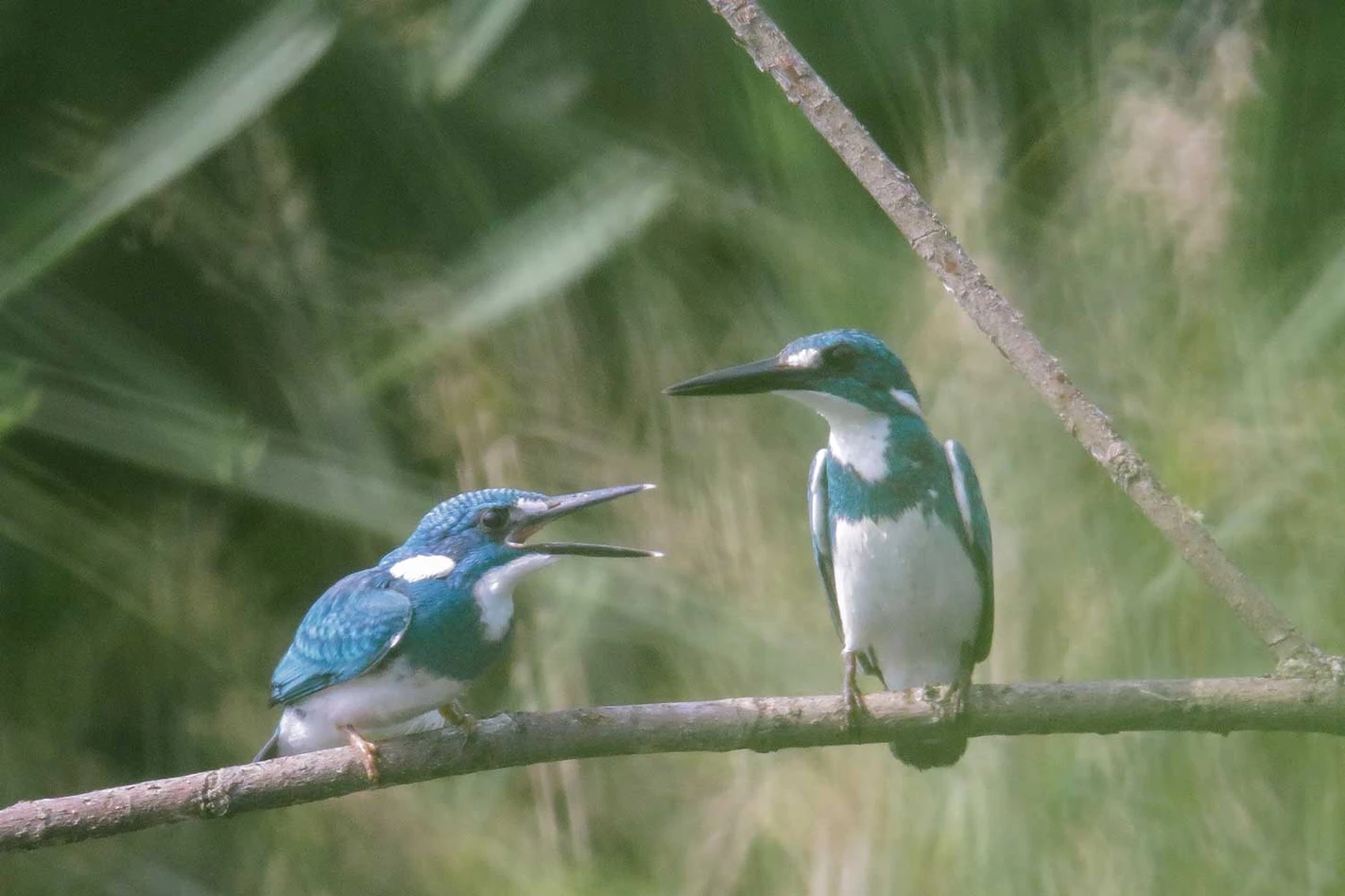
Then we walk slowly, a clear call of Cerulean Kingfisher attracting us. For sure, a single bird perched in front of us, divided by the river. The kingfisher was perched on a bush near the water surface. Then it flies, responding to the other kingfisher’s calls.

We move to the parking area and prepare our stuff to get inside. But, we have to take time around the Muntingia calabura tree.

3 individuals of Scarlet-headed Flowerpeckers foraging on that tree. Our client pulled up his binocular to add it into his life-list. Bravo! new lifer again.

Satisfied with it, we continued walking to pursue our main target.

Walk for about 500 meters inside through fish-pond and mangrove trees. Then we played the Javan White-eye’s sounds. We heard the response at a mangrove tree that was full of Cave Swiftlet. This was also new for him.

We approached the tree and found the object. Voila! our ears were correct, four individuals gleaning its prey below the mangrove’s leaves at the middle canopy.

The Javan White-eye foraging in mangrove tree

Hang out and enjoy the birds also following its movement while watching other species until our clients are satisfied.

At 8.30 am we moved out to warung (small canteen) near the parking area. After taking a break for a while we continued again to other directions. But the number of birds was low and no new birds were added to the list. So we ended the trip and started driving to the airport.

Highlights:

  1. 6+ individuals Javan White-eye (Zosterops flavus)
  2. A male Freckle-breasted Woodpecker (Dendrocopos analis)
  3. 5 individuals Cerulean Kingfisher (Alcedo coerulescens)
  4. A pair and 1 immature male Scralet-headed Flowerpecker (Dicaeum trochileum)
  5. Single adult Javan Tailorbird / Olive-backed Tailorbird (Orthotomus sepium)

Other birds are included such as:

Javan-pond Heron, Purple Heron, Cattle Egret, Little Egret, Striated Heron, Great Egret, White-shouldered Thriller, Spotted Dove, Island-collared Dove, Sacred Kingfisher, Javan Plover, Common Sandpiper, Whimbrel, Whiskered Tern, Little Tern, Gull-billed Tern, Black-winged Stilt, Golden-bellied Gerygone, Little Black Cormorant, Sunda Teal, Racket-tailed Treepie, Cave Swiftlet, Scally-breasted Munia, Eurasian Tree Sparrow.

Other Taxa:

Javan Mongoose

Fullday Birding in Malang, East Java

On fine morning (May 16th 2018) we managed one day birding trips on Malang, East Java for a couple clients from Indonesia. 19 species succeed to observe from two birding locations such as Batu Apple Farm and Raden Soerjo Greater Park Forestry.

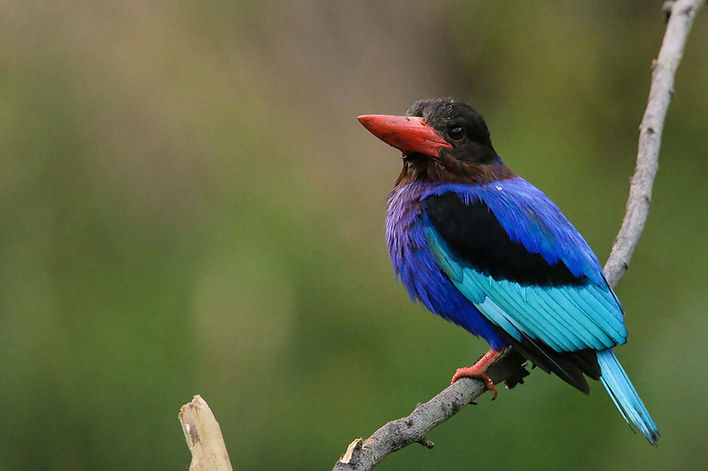
Our first stop was at Apple Farm for Javan Kingfisher. Not to long wait, we were immediately greeted by a Javan Kingfisher after parking our car. For 30 minutes in location, four individual Javan Kingfishers recorded. Other than that we recorded Common Tailorbird, Sooty-headed Bulbul and Yellow-vented Bulbul.

Satisfied in the first location, we continued the trip to the second location that made us drive for 30 minutes. In that tropical rain forest we managed to find Sunda Cuckooshrike, Cinereus Tit, Snowy-browed Flycatcher, Sunda minivet, Scaly-breasted Munia, and Blue Nuthatch.

Then we moved to another area of the park in Watu Ondo waterfall. Montane birds such as Sunda (Javan) Bulbul, Orange-spotted Bulbul, Ruddy Cuckoo-dove, Flame-fronted Barbet, and female Little-pied Flycatcher accompany us to enjoy the breeze atmosphere. We decided to climb down toward the waterfall for a moment.

For lunch, we chose a small restaurant around the area to taste local traditional food. After that we hang out at twin bridges waiting for more birds, hoping the Javan Hawk-eagle will appear. Failed to wait more because the afternoon was getting cloudy, so we decided to finish the trip with birds closing the day such as Javan Grey-throated White-eye, Ashy Drongo, White-flanked Sunbird and Indigo Flycatcher as our client’s favorite.

4 Days Birding Tours in Bali and East Java

We were so happy after a successful trip with clients from the US. During April 4 – 7th 2018 between their honeymoon in Indonesia, together we were birding in Bali and East Java. The tours were fantastic with a total of 118 species, also main target Bali Myna and Javan-hawk Eagle success to be recorded. 90% of the birds we found were new for Casey and Versha.

The tours started in Bali where we visited main birding locations such as around Bedugul Botanical Gardens and Bali Barat National Park. Then the following day we visited great forests around mount Ijen and savanna like grassland in Baluran NP and Alas Purwo NP. Casey and Versha were amazed with the habitat in each birding location and they enjoyed the pace of the tours.

Here the itinerary of the tours:

Day 1 – April 4th 2018 Meet up at hotel in Benoa, Bali at 5.00 am then drive to Bedugul Botanic Garden in search of montane birds. Arrived here at 7.00 am, then we birding until 11.00 am. Lunch at a small restaurant near the locations, 00.30 pm continue birding around lake Beratan and Buyan. Suddenly the rain fell so we decided to change the birding area in Bali Barat NP for the main target, Bali Myna/Starling.

Wild Bali Myna (Starling) from Bali Barat NP

We were so lucky, when we arrived the rain stopped and the wild (no rings on its legs) Bali Myna perched on the rooftop near the parking area. We spent just 30 minutes then looking at other birds in another part of Bali Barat NP while we drove to the port of Gilimanuk.

Before dawn we took a ferry and crossed the Bali strait. Then drive to the Grand Harvest Resort near Mount Ijen. We stayed overnight here before boarding Mount Ijen the next day.

Day 2 – April 5th 2018

Check out from the hotel then drive for 30 minutes to the forest around mount Ijen. When we arrived, we quickly looked for the most targeted birds in Ijen, Grey-breasted Partridge. Sadly, we only heard after hanging up for half an hour. Continue looking at other montane birds. Lunch in Paltuding (entrance ticket to hike mount Ijen), where plenty of small restaurants are available. After that at 00.30 pm drive down while stopping by in search of endemics and others.

Immature (above) and adult (below) Grey-and-Buff Woodpecker, Mount Ijen

At 02.00 pm we finished birding in mount Ijen, then we drove to the small marshes near Baluran NP. Our target is Asian Golden Weaver, successfully added to our list. After dinner we stayed in Watu Dodol for the next two nights.

Day 3 – April 6th 2018

After breakfast we went to Baluran NP, while driving-in the park we stopped in an evergreen area. Then we continue looking for other lowland birds in the mangrove area until 11.00 am. Lunch at a small canteen near the Bama beach, after that Versha wanted to enjoy the sea while we rested for a while. In the afternoon, drive-out then stop in Bekol savannah-like grassland to enjoy the sunset.

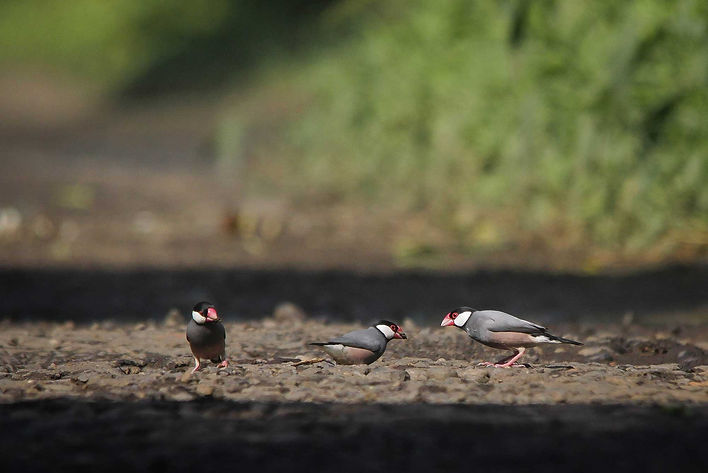
3 individuals Java Sparrow from Baluran National Park

Day 4 – April 7th 2018 We had a long drive on the last day. In the morning at 6.30 am we arrived in Alas Purwo NP at the south-eastern part of the island. First location was Sadengan grassland. We enjoyed our morning coffee while Banteng was grazing in front of us. We were birding in Alas Purwo until 9.00 am the drive out to a restaurant at Banyuwangi before we took ferries to cross Bali strait again.

One of five Great-slaty Woodpecker from Alas Purwo NP

111 species is ‘lifer’ or new for Casey, all kingfishers on this trip become Versha’s favorites, also the Long-tailed Macaque and Javn-leaf Monkey / Javan Langur. Here the highlight birds and the systematic list:

Highlights of the trip:

1. Bali Myna (Starling) Leucopsar rothschildi

Found in Teluk Trima, Bali Barat NP. 1 wild bird and about 10 individuals with rings on its legs.

2. Javan Hawk-eagle Nisaetus bartelsi

Single adult bird was soaring in the forest around Mount Ijen.

3. Grey-and-Buff (Red-crested) Woodpecker Hemicircus concretus

Pairs with immature male were foraging in the forest around mount Ijen.

4. Javan Kingfisher Halcyon cyanoventris

Single individuals perched on cable when we drive down from mount Ijen and one other in small marshes near Baluran NP

5. Great Slaty Woodpecker Mulleripicus pulverulentus

5 individuals were seen in the morning near Sadengan grassland, Alas Purwo NP.

Gallery:

Systematic List:

6. Javan Pond-Heron Ardeola speciosa | Buyan Lake, Bali
7. Wooly-Necked Stork Ciconia episcopus | Paddy-field near mount Ijen, East Java
8. Lesser Adjutant Leptoptilos javanicus | Alas Purwo NP
9. White-Bellied Fish-Eagle Haliaeetus leucogaster | Bali Barat NP
10. Crested Serpent-Eagle Spilornis cheela | Bali Barat NP
11. Black-Thighed Falconet Microhierax fringillarius |Baluran NP
12. Barred Buttonquail Turnix suscitator | Baluran NP
13. Green Peafowl Pavo muticus | Baluran NP
14. Green Junglefowl Gallus varius | Baluran NP
15. White-Breasted Waterhen Amaurornis phoenicurus | Small marshes near Baluran NP
16. Whimbrel Numenius phaeopus | Bali Barat NP
17. Pintail Snipe Gallinago stenura | Small marshes near Baluran NP
18. Black-Naped Tern Sterna sumatrana | Baluran NP
19. Greater Crested Tern Thalasseus bergii | Baluran NP
20. Pink-Necked Green-Pigeon Treron vernans | Bali Barat NP
21. Orange-Breasted Green-Pigeon Treron bicinctus | Baluran NP
22. Pink-Headed Fruit-Dove Ptilinopus porphyreus | Mt. Ijen
23. Green Imperial-Pigeon Ducula aenea | Baluran NP
24. Barred Cuckoo-Dove Macropygia unchall | Bali Botanical Gardens
25. Ruddy Cuckoo-Dove Macropygia emiliana | Bali Botanical Gardens
26. Zebra Dove Geopelia striata | Bali Barat NP
27. Island Collared-Dove Streptopelia bitorquata | Bali Botanical Gardens
28. Spotted Dove Spilopelia chinensis | Baluran NP
29. (Grey-capped) Emerald Dove Chalcophaps indica | Baluran NP
30. Plaintive Cuckoo Cacomantis merulinus | Small marshes near Baluran NP
31. Sunda Coucal Centropus nigrorufus | Alas Purwo NP
32. Savanna Nightjar Caprimulgus affinis | Bali Barat NP
33. Cave Swiftlet Collocalia linchi | Bedugul Botanical Gardens
34. Grey-Rumped Treeswift Hemiprocne longipennis | Bali Barat NP
35. Small Blue Kingfisher Alcedo coerulescens | Bali Barat NP
36. Oriental Dwarf-kingfisher Ceyx erithaca | Baluran NP
37. Sacred Kingfisher Todiramphus sanctus | Bali Barat NP
38. Collared KingfisherTodiramphus chloris | Baluran NP
39. Chestnut-Headed Bee-Eater Merops leschenaulti | Bali Barat NP
40. Blue-Tailed Bee-Eater Merops philippinus | East Java
41. Oriental Pied Hornbill Anthracoceros albirostris | Baluran NP
42. Yellow-Eared Barbet Psilopogon australis | Alas Purwo NP
43. Coppersmith Barbet Psilopogon haemacephalus | Bali Barat NP
44. Freckle-Breasted Woodpecker Dendrocopos analis | Baluran NP
45. Sunda Pygmy Woodpecker Picoides moluccensis | Baluran NP
46. Laced Woodpecker Picus vittatus | Alas Purwo NP
47. Crimson-Winged Woodpecker Picus puniceus | Baluran NP
48. Black-Winged Flycatcher-Shrike Hemipus hirundinaceus | Mt. Ijen
49. Sunda Cuckooshrike Coracina larvata | Mt. Ijen
50. Pied Triller Lalage nigra | Baluran NP
51. White-Shouldered Triller Lalage sueurii | Bali Botanical Gardens
52. Small Minivet Pericrocotus cinnamomeus | Mt. Ijen
53. Sunda Minivet Pericrocotus miniatus | Mt. Ijen
54. Common Iora Aegithina tiphia | Baluran Np
55. Sooty-Headed Bulbul Pycnonotus aurigaster | Bedugul Botanical Gardens
56. Olive-Winged Bulbul Pycnonotus plumosus | Baluran NP
57. Yellow-Vented Bulbul Pycnonotus goiavier | Baluran NP
58. Ruby-Throated Bulbul Pycnonotus dispar | Alas Purwo NP
59. Orange-Spotted Bulbul Pycnonotus bimaculatus | Mt. Ijen
60. Sunda (Javan) Bulbul Ixos virescens | Mt. Ijen
61. Lesser Racket-Tailed Drongo Dicrurus remifer | Bali Botanical Gardens
62. Ashy Drongo Dicrurus leucophaeus | Bali Botanical Gardens
63. Black-Naped Oriole Oriolus chinensis | Bali Botanical Gardens
64. Blue Nuthatch Sitta azurea | Mt. Ijen
65. Crescent-Chested Babbler Cyanoderma melanothorax | Bali Botanical Gardens
66. Grey-Cheeked Tit-Babbler Mixornis flavicollis | Alas Purwo NP
67. Javan Whistling-Thrush Myophonus glaucinus | Bali Botanical Gardens
68. Golden-Bellied Gerygone Gerygone sulphurea | Bali Barat NP
69. (Javan) Sunda Warbler Phylloscopus grammiceps | Bali Botanical Gardens
70. Arctic Warbler Phylloscopus borealis | Bali Botanical Gardens
71. Mountain Leaf-Warbler Phylloscopus trivirgatus | Bali Botanical Gardens
72. Zitting Cisticola Cisticola juncidis | Small marshes near Baluran NP
73. Striated Grassbird Megalurus palustris | Bali Botanical Gardens
74. Sunda Bush-Warbler Cettia vulcania | Mt. Ijen
75. Russet (Javan)Bush-Warbler Locustella montis | Mt. Ijen
76. Ashy Tailorbird Orthotomus ruficeps | Baluran NP
77. Plain Prinia Prinia inornata | Small marshes near Baluran NP
78. Fulvous-Chested Jungle-Flycatcher Cyornis olivaceus | Bali Botanical Gardens
79. Oriental Honey-Buzzard Pernis ptilorhynchus | Mt. Ijen
80. Indigo Flycatcher Eumyas indigo | Mt. Ijen
81. Narcissus Flycatcher Ficedula narcissina | Mt. Ijen
82. Little Pied Flycatcher Ficedula westermani | Bali Botanical Gardens
83. Grey-Headed Canary-flycatcher Culicicapa ceylonensis | Bali Botanical Gardens
84. Mangrove Blue-Flycatcher Cyornis rufigastra | Baluran NP
85. Hill-blue Flycatcher Cyornis banyumas | Baluran NP
86. Sunda Pied Fantail Rhipidura javanica | Bali Barat NP
87. White-Bellied Fantail Rhipidura euryura | Mt. Ijen
88. Mangrove Whistler Pachycephala cinerea | Baluran NP
89. White-Breasted Wood-Swallow Artamus leucorynchus | Bali Barat NP
90. Yellow Wagtail Motacilla flava | Bali Botanical Gardens
91. Paddyfield Pipit Anthus rufulus | Baluran NP
92. Asian Glossy Starling Aplonis panayensis | Bali Botanical Gardens
93. Short-Tailed Starling Aplonis minor | Bali Botanical Gardens
94. Black-Winged (Grey-backed) Myna Acridotheres melanopterus tricolor | Baluran NP
95. Javan Myna Acridotheres javanicus | Alas Purwo NP
96. Olive-Backed Sunbird Cinnyris jugularis | Bali Barat NP
97. Indonesian Honeyeater Lichmera limbata | Buyan Lake, Bali
98. Scarlet-Headed Flowerpecker Dicaeum trochileum | Baluran NP
99. Blood-Breasted Flowerpecker Dicaeum sanguinolentum | Bali Botanical Gardens
100. Mountain White-Eye Zosterops montanus | Bali Botanical Gardens
101. Javan Grey-Throated White-Eye Heleia javanica | Bali Botanical Gardens
102. Java Sparrow Lonchura oryzivora | Baluran NP
103. Javan Munia Lonchura leucogastroides | Small marshes near Baluran NP
104. Scaly-Breasted Munia Lonchura punctulata | Mt. Ijen
105. White-Headed Munia Lonchura maja | Small marshes near Baluran NP
106. Asian Golden Weaver Ploceus hypoxanthus | Small marshes near Baluran NP
107. Asian Brown Flycatcher Muscicapa dauurica | Alas Purwo NP
108. Black-Crowned Night-Heron Nycticorax nycticorax | Small marshes near Baluran NP
109. Common Sandpiper Actitis hypoleucos | Buyan Lake, Bali
110. Gull-Billed Tern Gelochelidon nilotica | Baluran NP
111. Lesser Crested-Tern Thalasseus bengalensis | Baluran NP
112. Lesser Coucal Centropus bengalensis | Baluran NP
113. Pacific Swallow Hirundo tahitica | Baluran NP
114. Black Drongo Dicrurus macrocercus | Baluran NP
115. Great Tit Parus Major | Baluran NP
116. Common Moorhen Gallinula chloropus | Buyan Lake, Bali
117. Long-Tailed Shrike Lanius schach | Buyan Lake, Bali
118. Eurasian Tree Sparrow Passer montanus | Buyan Lake, Bali

Other Taxa:

1. Long-talied Macque
2. Javan-leaf Monkey / Javan Langur
3. Banteng
4. Timor Deer
5. Water Buffalo

5 Days Customized Birding Tours around Malang, East Java

On March 16 – 20th 2018 we managed to arrange bird photography trips for our clients from Hong Kong. This custom-tailor trip only has a few targets, Banded Kingfisher and Javan Banded Pitta. Visited five birding locations around Malang, East Java. We Met up in the afternoon in Juanda international airport, Surabaya on March 16th (Day 1) then we drove to a Hotel in Malang, while having dinner on the way.

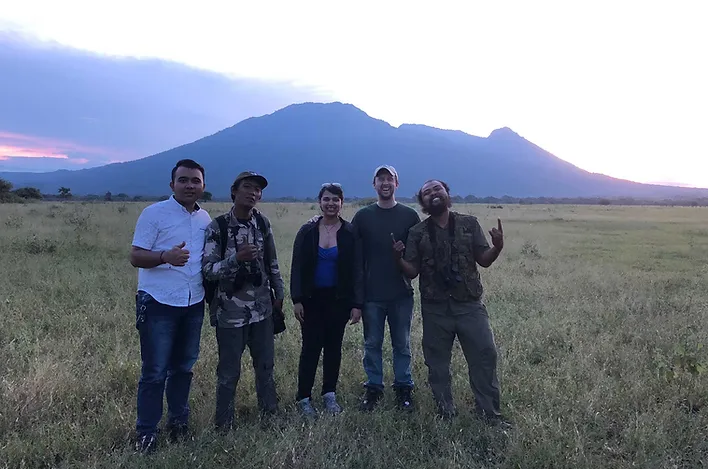
Group photo with clients

Start birding on day two, at 5.00 am we drive to a coffee plantation in Jabung village, Malang to take shots of Javan Banded Pitta. Sadly, we failed because three different nests were empty. Maybe, taken by predators or the chicks already fledged.

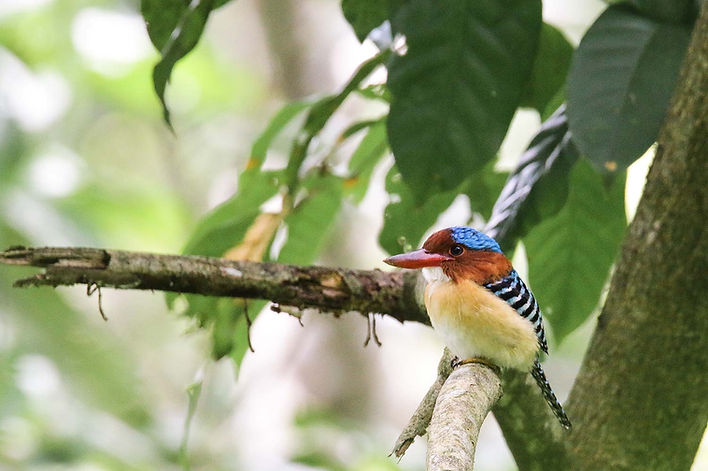
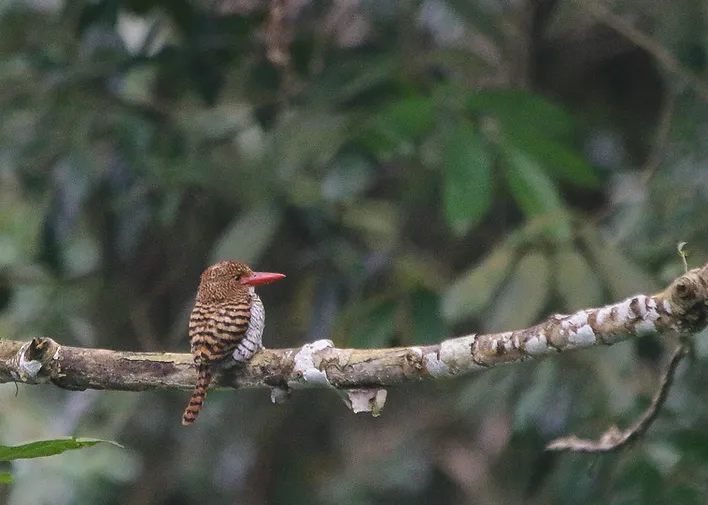
Then we changed direction to Piket Nol, Lumajang in search of the main target, Banded Kingfisher. We hang out near it’s nest from 10.00 am until 4.00 pm. Lucky to see and get the pictures of the female, but we missed the male until afternoon. So, we drove to Hotel Cakra, Malang and tried another chance the next morning.

Frontal view of female Banded Kingfisher

Start driving at 5.00 am (March 18th) and reach the same location as yesterday at 7.00 am. We waited in a camouflage tent until 10.00 am with no presence of male birds. Then our friends in different spots called us via handy-talky that they saw the male.

Quickly we packed our gear and moved. For 45 minutes we enjoyed and shot many pictures of colorful male birds. Also present the Javan Broadbill that managed to save on our camera’s card.

Eye level with male Banded Kingfisher

At 12.30 pm we drove to Pasirian, Lumajang while having lunch in a small cafeteria on the way. at 2.00 pm we arrived, built the tent next to small fish-ponds waiting for Cerulean Kingfisher. How lucky we are, one family of 2 adults and 1 immature managed to get the pictures. We enjoyed moving from the area in the afternoon.

One grup family of Cerulean Kingfisher

We had a long drive on day four (March 19th), six hours driving from Pasirian, Lumajang (our clients want to take Cerulean Kingfisher in early daylight) to Apple Farm in Batu city. When we arrived, the weather was a little rainy. Worried the Javan Kingfisher would not show, but we tried first.

Just waited for 10 minutes, the birds were coming. Perched on a small branch, we had a super close and clear view!

Super close and clear with Javan Kingfisher

On the last day, we have two hours to get another chance to shoot Javan Banded Pitta in Prigen, Pasuruan before we leave the area. At 9.00 am we finished the tour then dropped off our clients at the airport in frustration of the Pitta!

Fun-Birding on Bima, Sumbawa Island

Reports from Gizan Hila on his latest birding trip in Sumbawa island.

Two days birding was done on February 28th 2018 and March 1st 2018 at two locations in Sumbawa island, West Nusa Tenggara part of Lesser Sunda archipelago. This trip was more like fun birding. We enjoyed the landscape while the birds showed up to complete the panorama.

Nisa Nawi beach from Nanga Nur, Sumbawa island
  • Day One – Feb 28th 2018

We visited Nisa Wawi beach at Nanga Nur peninsula, administered in Sangia village, Sape sub-district, Bima regency. To reach this small island we had to drive for 40 minutes from Bima city (boat trip for 20 minutes from Sape harbor).

Only tamarinds which is a big tree on this island, in addition reeds, Lote trees and shrubs that grow around beaches and limestone peninsulas. Finish enjoyed the “beach watching” then we start birding on 8.00 pm, focused for owling until 10.00 pm.

  • Day Two – Mar 1st 2018

Drive west for 30 minutes from Sape harbor to reach a river which is surrounded by dense vegetation in Diwu Konca (an hour from Sultan Muhammad Salahuddin Airport) . Administered in Sari village Sape sub-district, Bima regency.

We also visited other habitats such as terraced rice fields and bamboo clusters for afternoon birding starting from 3.00 pm until 6.00 pm.

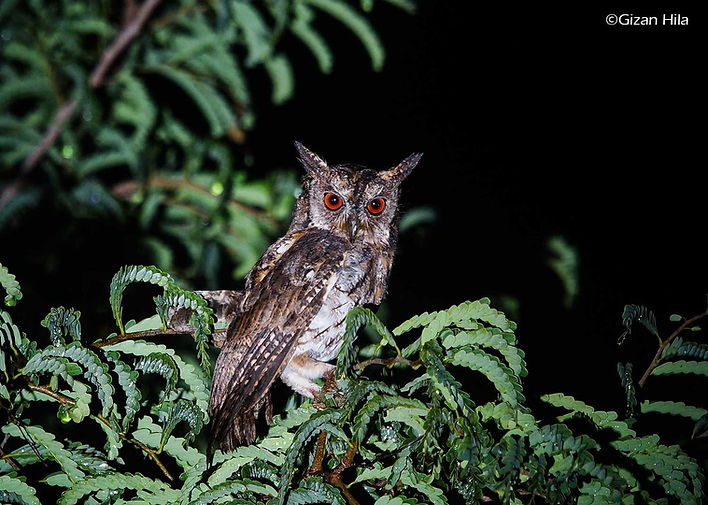
Mollucan Scops Owl from Nisa Wawi, Bima, Sumbawa island

17 participants were joining this party. Managed to see 20 bird species. Here with the highlights such as:

Mollucan Scops Owl, 5 individuals seen at Nisa Wawi

– 30 individuals White-shouldered Triller at Nisa Wawi – Golden-rumped Flowerpecker, 10 individuals seen at Diwu Konca – Two pairs of Rusty-breasted Whistler at Diwu Konca – A single Grey-capped Emerald Dove at Diwu Konca

Other notable birds included:

Scaly-breasted Munia, Black-naped Monarch, Zitting Cisticola, Blue-tailed Bee-eater, Blue-eared Kingfisher, Cave Swiftlet, Lemon-bellied White-eye, Yellow-ringed White-eye, Olive-backed Sunbird, Sooty-headed Bulbul, Collared Kingfisher, Lesser Coucal, Spotted Dove, Red Junglefowl, Long-tailed Shrike.

Gallery:

2 Days Birding Tours in Jogja

Managed to arrange two days birding tours for Sarah Hammarlund from the United States of America during her trips in Yogyakarta (or simply Jogja). This birding tour was run by our local partner birdtour operator, named Loontour Jogja and led by Imam Taufiqqurrahman. Indonesia, especially Jogja, is new for our clients, so almost all the birds she has seen become her lifers. The fruitful trip listed 50 bird species!

At gate Telogo Nirmolo, Gunung Merapi National Park, Jogja

On the first day February 26th 2018, we visited Gunung Merapi National Park. While waiting for the gate to open, scanning birds around Plunyon, Kaliurang until 8.00 am. Then move to Plawangan hill via Telogo Nirmolo. At 12.00 am I managed to see 22 bird species. Next, drive for 45 minutes to Jogja city at Melia Purosani hotel in search of Java Sparrow.

Scanning around pines tree at west part of the hotel, quickly pairs of the birds catch by our scopes as close the day.

The trip continued on March 2nd 2018, the first stop was Jatimulyo village as part of Menoreh Mountains (an hour drive west of Jogja city). Searching lowland birds around this agroforest ecosystem. At noon we drive for an hour to Trisik beach and Kali Progo estuary for shorebirds. Visited three habitats such as paddy field, beach and estuary.

Fun! 30 birds on the second day. She was very excited with things beyond, such as the village situation, knowing the plantations that become popular products: coffee, chocolate, sugar palm. Even requested to see the ‘shy princess’ plant 😀

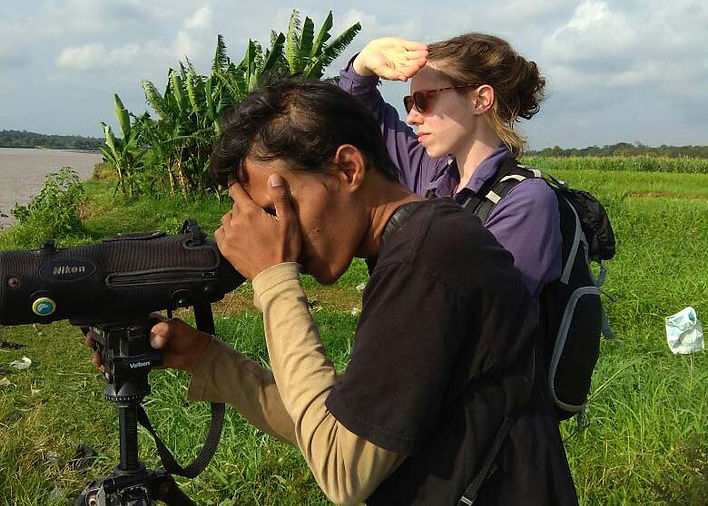
Imam and Sarah scanning shorebirds at Kali Progo estuary, Jogja

Finished the trip at afternoon with some highlights:

– 2 individuals of White-flanked Sunbird at Telogo Nirmolo, Gunung Merapi NP as her favorite

Javan Whistling Thrush at Telogo Nirmolo, Gunung Merapi NP

– Small flock of Javan Fulvetta at Telogo Nirmolo, Gunung Merapi NP

– 5 individuals of Pink-headed Fruitdove at Telogo Nirmolo, Gunung Merapi NP

– 5 individuals of Java Sparrow at Melia Purosani hotel

Ruby-throated Bulbul at Jatimulyo village

Streaky-breasted (Javan) Spiderhunter at Jatimulyo village

– 4 individuals of Cerulean Kingfisher at Kali Progo esturary

Javan Plover at Kali Progo estuary

Other notable birds included:

Slender-billed Crow, Javan Myna, Asian Glossy Starling, Striated Grassbird, Red-breasted Parakeet, Long-tailed Shrike, Ashy Drongo, Oriental White-eye, Ashy Tailorbird, Chestnut-backed Scimitar-babbler, Sunda Bulbul, Barred Cuckoo-dove, Spotted Dove, Crested Honey Buzzard, Yellow-vented Bulbul, Black-capped Babbler, Crested Goshawk, Cave Swiftlet, Sunda Pygmy Woodpecker, Black-winged Flycatcher-shrike, Common Iora, Sooty-headed Bulbul, Hordfield’s Babbler, Asian Brown Flycatcher, Orange-bellied Flowerpecker, Brown-throated Sunbird, Little Spiderhunter, Javan Munia, Peregrine Falcon, Little Egret, Eastern Cattle Egret, Javan Pond Heron, Yellow Bittern, Barred Buttonquail, Pacific Golden Plover, Common Sandpiper, Greater Crested Tern, Barn Swallow, Zitting Cisticola, Plain Prinia, Olive-backed Sunbird.

Halfday Birding in Tahura Raden Soeryo, East Java. February 2018

When in Malang or Surabaya you can get a pretty neat bird list just by visiting Tahura Raden Soeryo at 37 Km to the north of Malang city (90 Km to the south-west of Surabaya city), on the west slope of Mount Welirang.

If there are still days left during the holidays in Malang which is usually the main purpose is Mount Bromo, can be tried fullday or halfday birding trips in this peaceful montane forest.

Photograph Indigo Warbling Flycatcher in parking area of Watu Ondo waterfalls.

As we did on February 14, 2018 went very well with one participant from England. Our clients want to get some nice photos of endemic Indigo Warbling Flycatcher Eumyas indigo. Very easily he got it and a bonus Narcissus Flycatcher Ficedula narcissina as his lifer.

We visited three different spots around Tahura Raden Soeryo. In the morning we went to the first stop in Watu Ondo Waterfall. We were searching for birds around the parking lot surrounded by bushes and trees that were quite dense. Around the canteen did not escape from our binoculars view, this place is suitable to see the activity of birds on the top tree’s canopy and also to enjoy the view of the waterfalls. In addition we also went down the river starting from the side of the canteen. The trees around the toilet are also valuable for checking, often seen as a mix flock in this area.

Main target during this trip, Indigo Warbling Flycatcher

Low bird activity we decided to visit Cangar hot springs, stop by at the Twin Bridge but the conditions here are also the same. The trek to the Japanese cave is the main birding location in Cangar hot springs. About 400 meters long tracks surrounded by bushes and trees typical of mountain forests. In addition, the river that flows around Cangar and around the cafeteria is worth adding to the list of birds.

Highlights: – One pair of Orange-spotted Bulbul with a great view in the parking area of Watu Ondo waterfall.

Indonesia montane endemic, Orange-spotted Bulbul

– One pair of Sunda Forktail seen behind the canteen of Watu Ondo waterfall.

Record shot of Sunda Forktail, endemic to Indonesia.

– 4-6 individuals of Indigo Warbling Flycacther at the parking area of Watu Ondo waterfall.

Frontal view of Indigo Warbling Flycatcher.

– Two individuals Narcissus Flycatcher around the toilet of Watu Ondo waterfall. This species is rare visitor to Indonesia.

Our client's lifer during this trip, the rare visitor Narcissus Flycatcher

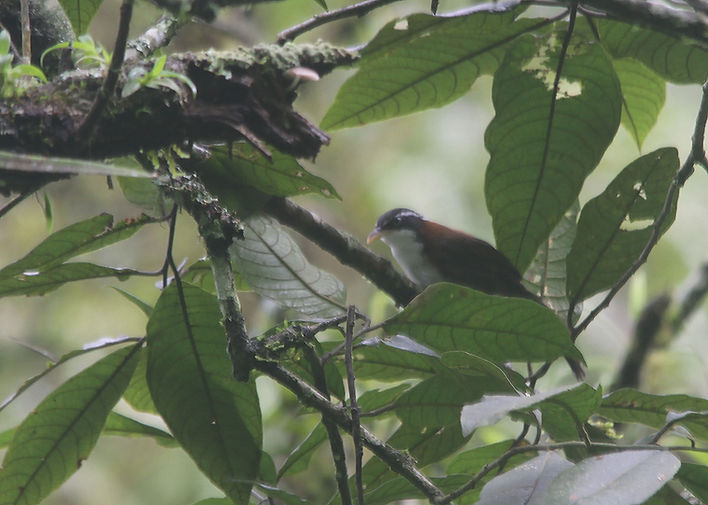
– Six individuals of Javan scimitar-babblers (recently split from Chestnut-backed scimitar-babblers by some authors) near a Japanese cave.

Recently split from Chestnut-backed scimitar-babbler by some author, Javan Scimitar Babbler

– Two pairs of Pied-shrike Babblers in front of canteen Watu Ondo waterfall. – One pair Thrilling-shrike Babbler in front of canteen Watu Ondo waterfall.

Other notable birds included:

Flame-fronted Barbet, Long-tailed Shrike, Crested-honey Buzzard, Crested Serpent Eagle, Black Eagle, Spotted Dove, Ruddy Cuckoo-dove, Pink-headed Fruitdove, Chestnut-breasted Malkoha, Cave Swiftlet, Banded Broadbill, Grey Wagtail, Javan Cuckooshrike, Sunda Minivet, Black-winged Flycatcher-shrike, Sooty-headed Bulbul, Sunda Bulbul, Lesser Shortwing, Javan Whistling Thrush, Crescent-chested Babbler, Horsfield’s Babbler, Sunda Bush Warbler, Common Tailorbird, Snowy-browed Flycatcher, Blue Nuthatch, Blood-breasted Flowerpecker, White-flanked Sunbird, Ashy Drongo.

Other Taxa:

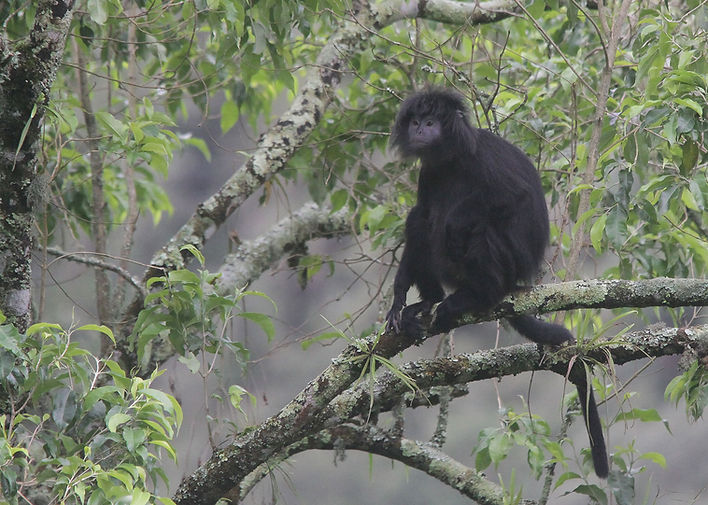
Javan Leaf Monkey

Indonesia endemic, Javan Leaf Monkey or Javan Langur

Birding Trips in Bromo Tengger Semeru National Park, January 2018

For 3 days we visited the most popular Bromo Tengger Semeru National Park, East Java which is famous for its panoramic epic Mount Bromo, Tenggerese peoples and the highest peak of Java island, Semeru mountain. In contrast to other visitors who usually visit the breathtaking mount Bromo or climb Semeru mountain, we visited four birding spots around that area. This National Park still has a large rainforest that is still good and protected, and would be good habitat conditions for wildlife, especially birds.

Looking for (Javan) Banded Broadbill on Piket Nol, Lumajang

On 17 January morning we headed to Piket Nol, Lumajang, East Java. The cliff area that became the crossroad of Malang-Lumajang highway still has good forest. We start from the searching of a bridge then walk westwards. In the morning the condition of passing vehicles is quite rare, so we just enjoy bird watching. Highlight birds that we managed to see for this spots are (Javan) Buff-rumped Woodpecker, Banded Kingfisher, (Javan) Banded Broadbill, Yellow-throated Hanging-parrot, Yellow-eared Barbet and Grey-cheeked tit-babbler.

Then at noon we drove to the south coast of Lumajang, at Selok Anyar village where habitat in this area is a rice field along the edge of the coastline with some angles there are fish ponds owned by the residents. Also there are some rice fields that become pastures where the buffalo graze.

Paddy field habitat in south-coast of Lumajang

We arrived here at 1.00 pm at a fishpond, immediately greeted by the Small-blue Kingfisher flying past us toward the other ponds. Then we walked along the rice fields, pastures and ponds to the rows of Australian pine tree beachside. As a result we noted many birds and the highlights were Javan Kingfisher, Small-blue or Cerulean Kingfisher, Javan Plover, Red Avadavat, Javan Munia.

Ruby on the ground, Red Avadavat or Strawberry Finch

On the second day we can only do a short birding until 10.30 pm in Ranu Darungan, Bromo Tengger Semeru NP because the rain does not stop until night. But in the lowland forest with a semi-natural lake, we managed to note endemic birds such as Javan Kingfisher, Sunda Cuckoo, Javan-banded Pitta, Sunda Forktail, and Javan Sunbird.

Similarly on the last day we were less fortunate. Arriving at the fourth birding spot, Coban Trisula departs from Ranu Darungan 1.5 hours through the rainforest in the area of Senduro and Tengger villages in Ranu Pani village and arrives at the location around 10:00 am. Not long after the rain was down until the afternoon. The rain stopped briefly, and there were some active birds like Pink-headed Fruitdove and White-browed Shrike-Babbler as well as the end of birding trips at Bromo Tengger Semeru NP.

HIGHLIGHTS:

(Javan) Buff-rumped Woodpecker: 2 individuals seen at Piket Nol, Lumajang, East Java.

Banded Kingfisher: a female perched for 30 minutes at Piket Nol, Lumajang, East Java.

(Javan) Banded Broadbill: 2 adults with 1 immature, looking for it’s meals at Piket Nol, Lumajang, East Java.

Yellow-throated Hanging-parrot: 2-3 birds were foraging at Piket Nol, Lumajang and 1 flight at Ranu Darungan, Bromo Tengger Semeru NP, East Java.

Yellow-eared Barbet: party of 22 birds at fruiting ficus sp tree in Piket Nol, Lumajang, East Java.

Sunda Coucal: 2 birds seen at sugarcane fields in south-coast of Lumajang, East Java.

Grey-cheeked Tit-babbler: a small flock about 6 birds at Piket Nol, Lumajang, East Java.

Crescent-chested Babbler: 6 birds foraging at bushes in Ranu Darungan, Bromo Tengger Semeru NP, East Java.

Javan Plover: a small flock of 6 birds foraging at paddy field in south-coast of Lumajang, East Java.

Javan Kingfisher: 3 individuals at paddy field south-coast of Lumajang and 1 bird at Ranu Darungan, Bromo Tengger Semeru NP, East Java.

Small-blue or Cerulean Kingfisher: 2 birds perched at a fishpond in the south-coast of Lumajang, East Java.

Blue-eared Kingfisher: a pair of male and female around lake of Ranu Darungan, Bromo Tengger Semeru NP, East Java.

Javan-banded Pitta: 4 individuals calling each other at Ranu Darungan, Bromo Tengger Semeru NP, East Java.

Javan Sunbird: A pair of male and female in Ranu Darungan, Bromo Tengger Semeru NP, East Java.

Sunda Forktail: single bird at the lake of Ranu Darungan, Bromo Tengger Semeru NP, East Java.

Sunda Cuckoo: 2 birds singing in the canopy of a big tree in Ranu Darungan, Bromo Tengger Semeru NP, East Java.

Pink-headed Fruitdove: 1 adult and 1 immature foraging at Coban Trisula, Bromo Tengger Semeru NP, East Java.

White-browed Shrike-Babbler: 1 male and 2 female catch moths at Coban Trisula, Bromo Tengger Semeru NP, East Java.

Red Avadat: 30 individuals looking for food on the ground of a paddy field in the south-coast of Lumajang, East Java.

Javan Munia: total 67 birds foraging paddy seed at paddy field in south-coast of Lumajang, East Java.

Other notable birds included:

Crested-serpent Eagle, Black-thighed Falconet, White-breasted Waterhen, Greater Coucal, Lesser Coucal, Rusty-breasted Cuckoo, Black-winged Flycatcher-shrike, Yellow-vented Bulbul, Lesser Shortwing, Horsfield’s Babbler, Ashy Drongo, Red-billed Malkoha, Plaintive Cuckoo, Square-tailed Drongo-cuckoo, Collared Kingfisher, Black-banded Barbet, Grey-and-buff Woodpecker, Freckle-breasted Woodpecker, Pied Triller, Scarlet Minivet, Large Woodshrike, Black-headed Bulbul, Sooty-vented Bulbul, Cream-vented Bulbul, Ashy Tailorbird, Wood Sandpiper, Yellow-bellied Prinia, Purple Heron, Eastern Cattle Egret, Javan Pond Heron, Common Buttonquail, Barred Buttonquail, Pacific Golden Plover, Common Sandpiper, Swinhoe’s Snipe, Pin-tailed Snipe, Greater Crested Tern, Spotted Dove, Savanna Nightjar, Cave Swiftlet, Blue-tailed Bee-eater, Barn Swallow, Pacific Swallow, Western Yellow Wagtail, Paddyfield Pipit, Zitting Cisticola, Plain Prinia, Common Tailorbird, Scaly-breasted Munia.

PHOTOGRAPHED BIRDS: